

Context
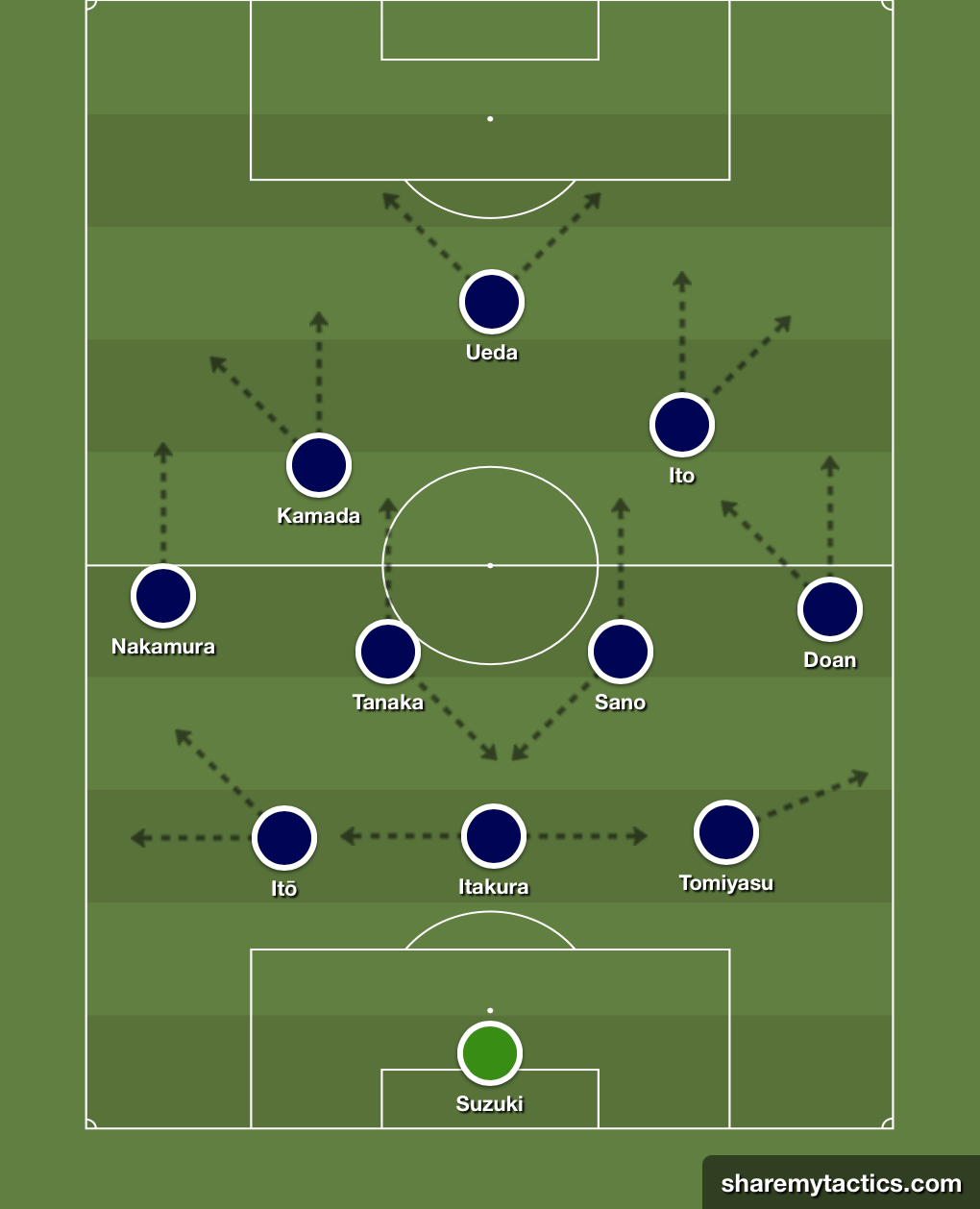
While I’ll go into Japan’s tactics in depth below, here are a few principles of their play that are useful to keep in mind:
— A midfielder drops into the back line to form a back four
— Wingbacks push high as wingers, where they rotate with the 10s
— Wide combinations and overloads that isolate the centre for underlapping runs
— Small distances in the centre, enabling fast vertical play through flick-ons and give-and-goes
📚 Contents
Note for email readers: This email may be truncated. To read the full article, please click on this link or the link to the right of [Message clipped] note at the bottom of this email.
Rotating Onto a Back Four
Whilst Japan provisionally lined up in a back three, I found their rotations onto a back four to be quite interesting, given what it enabled.
Ao Tanaka sees space → occupies space, dropping into the back line:
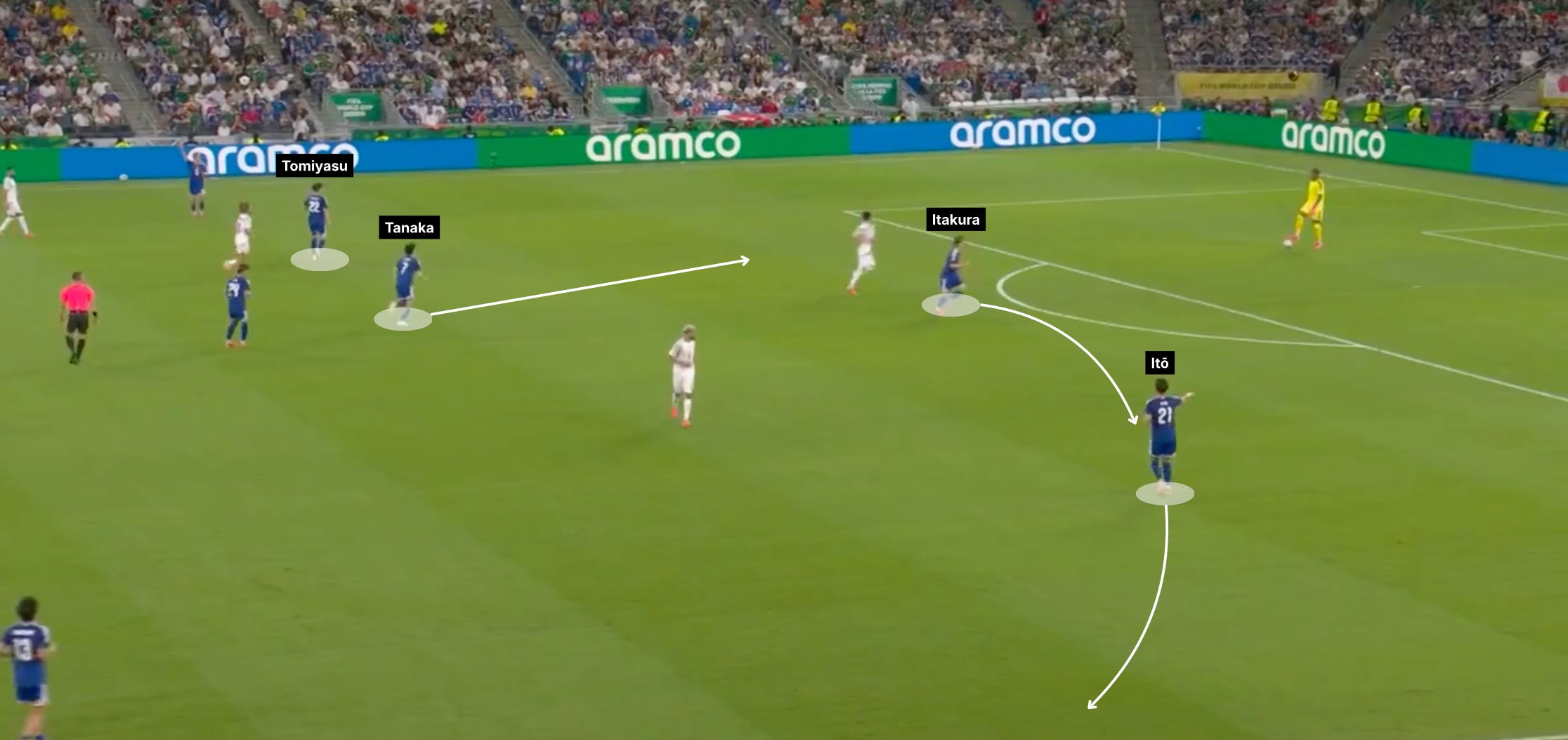
Ko Itakura subsequently covers LCB zones as Hiroki Itō pushes forward as the left-back. As a result, Japan now have a staggered back four, with Takehiro Tomiyasu - Tanaka - Itakura deep:
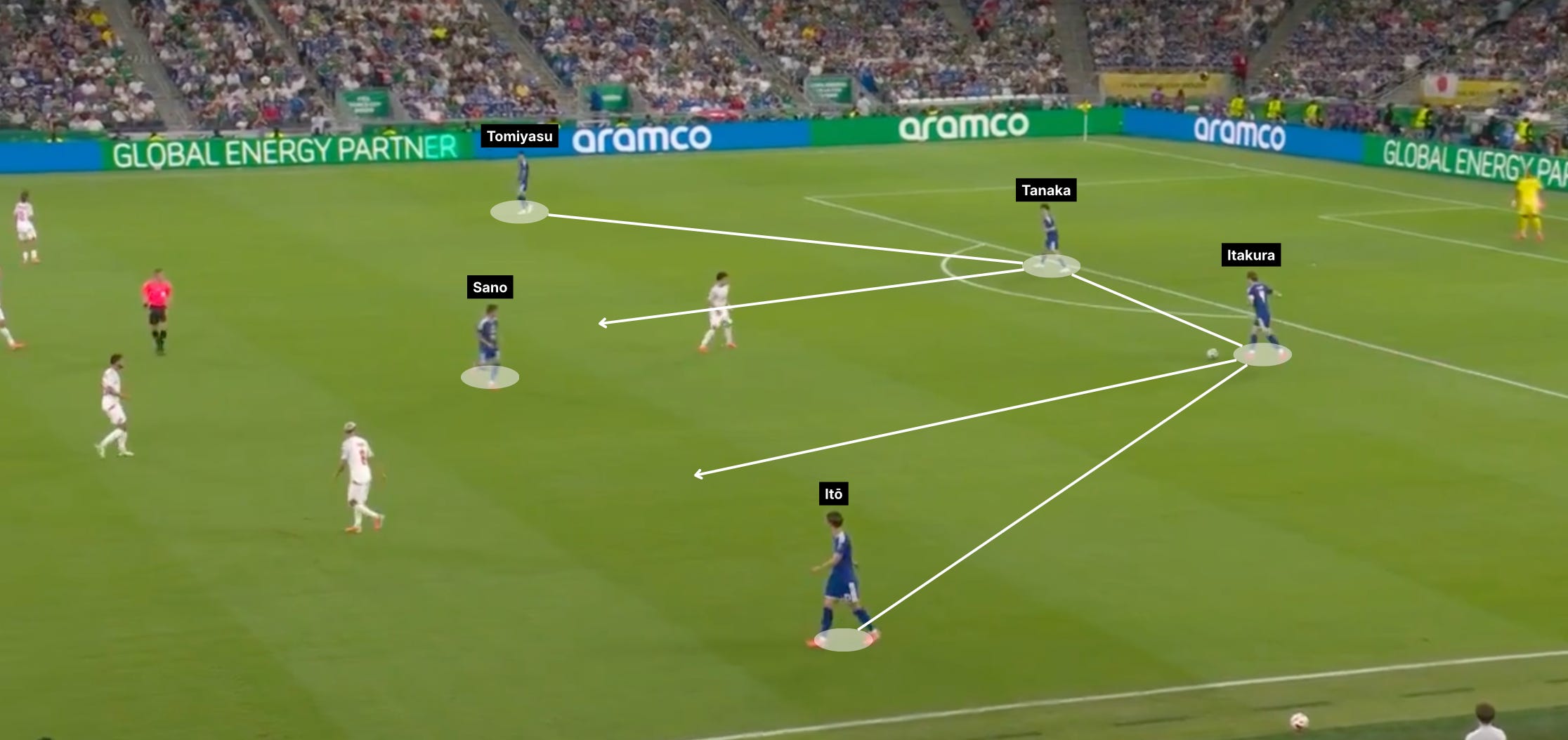
Tunisia don't press Japan's CBs, therefore allowing them to push upfield with the ball:
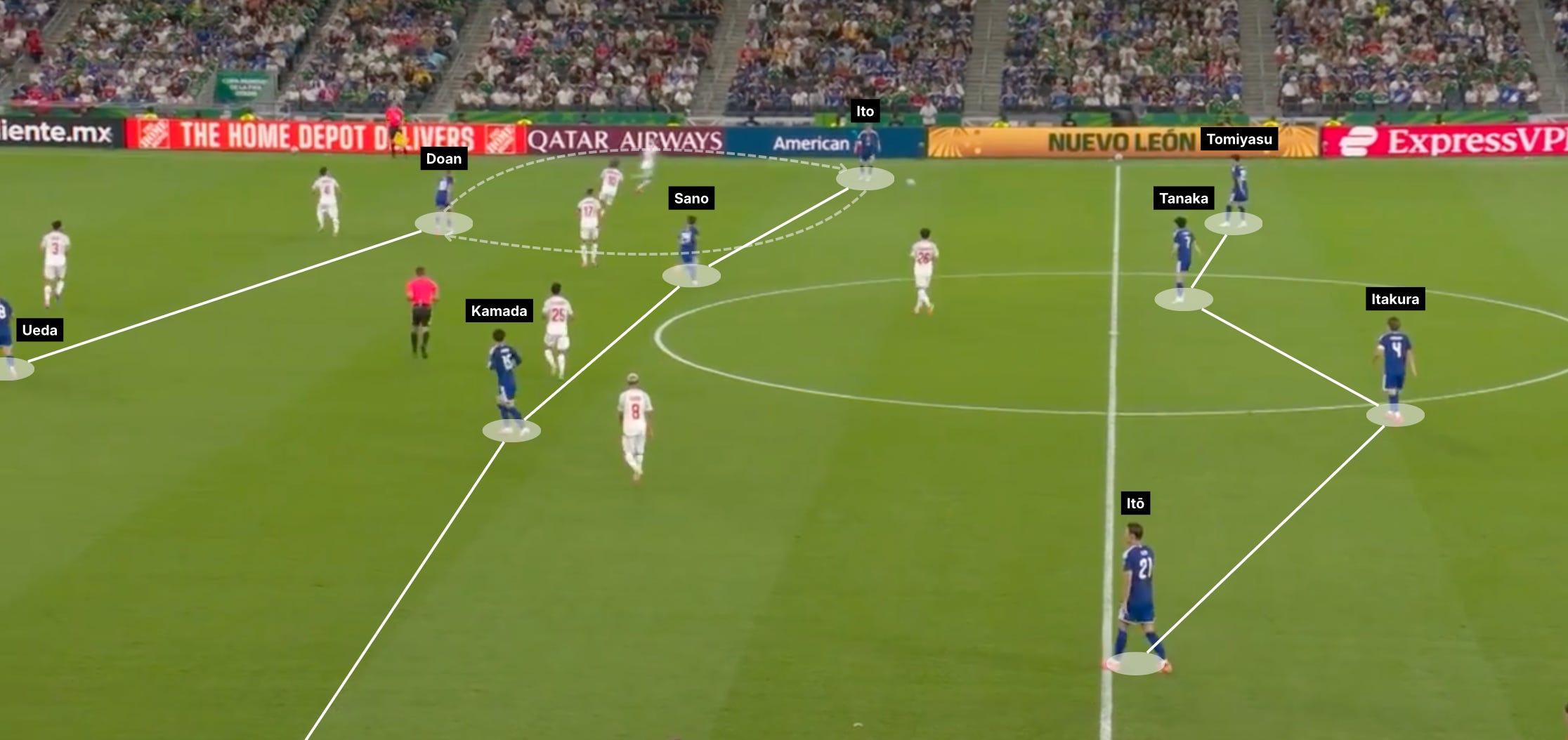
Japan therefore enable their more dynamic players (wingbacks) to push up the pitch as wingers. From here, Junya Ito (as the right-sided 10) and Ritsu Doan (as the right wingback), as well as Daichi Kamada (left-sided 10) and Keito Nakamura (left wingback), are all generally fluid on their flanks, meaning they rotate and interchange to occupy the half-spaces.
This constant movement feeds into Japan’s principle of overloading wide spaces, therefore isolating the centre. This then creates room for underlapping runs from whomever is occupying central zones, supported by combination play (flick-ons, lay-offs, give-and-goes) with Ayase Ueda as the 9, who loves to hang off defenders’ shoulders and between lines before making runs in behind.
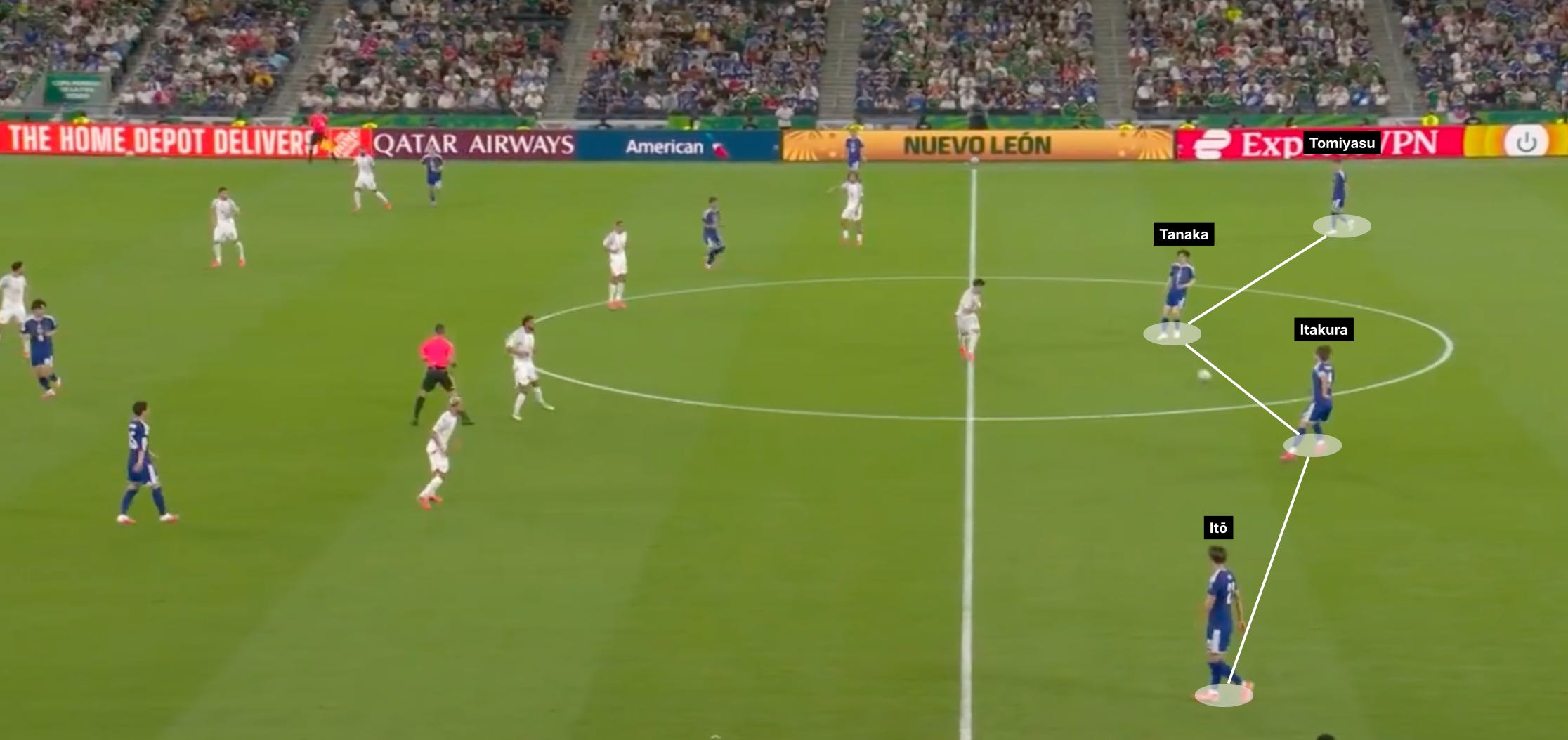
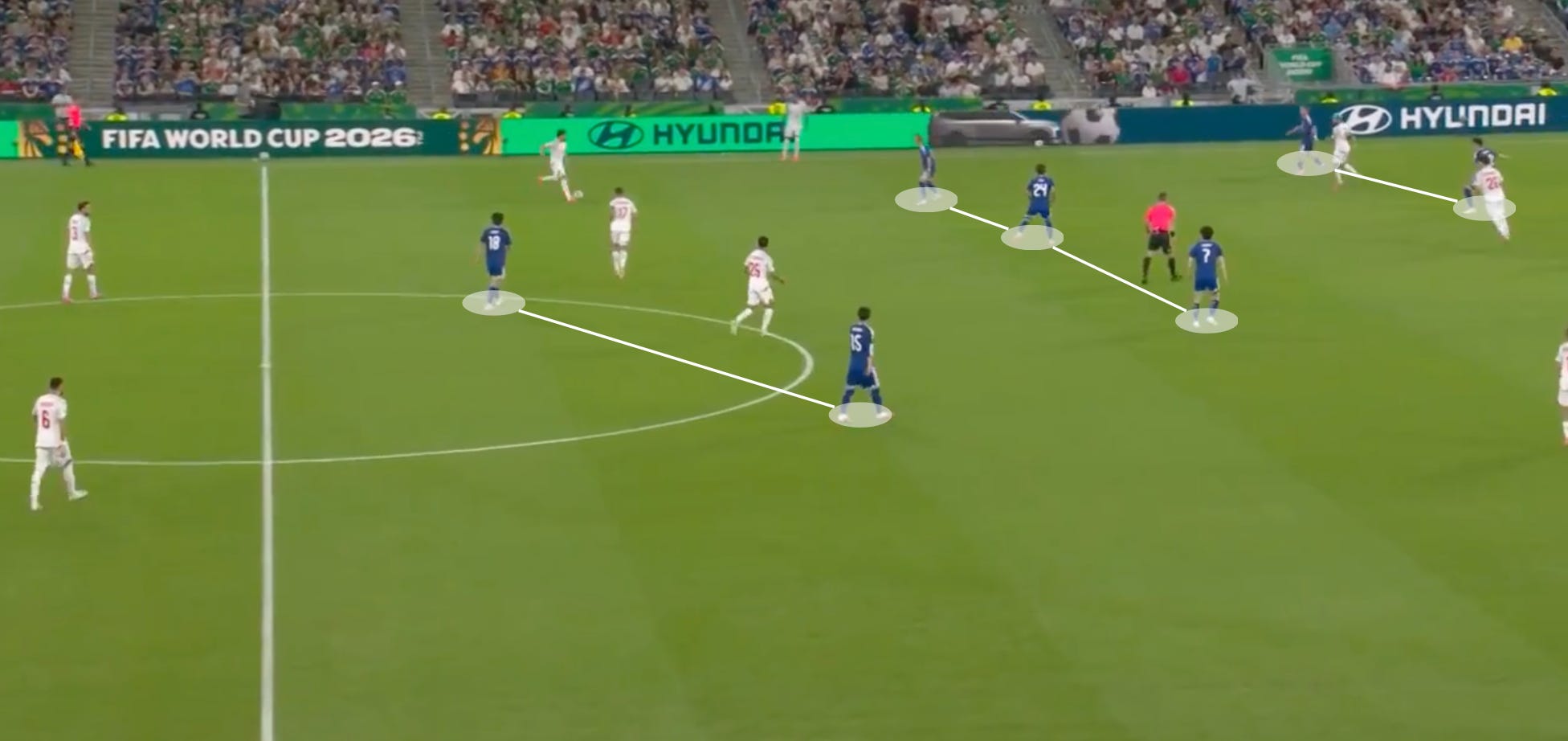
Given Japan’s propensity to drop into a back four via this movement, their midfield is often staggered between the lines:
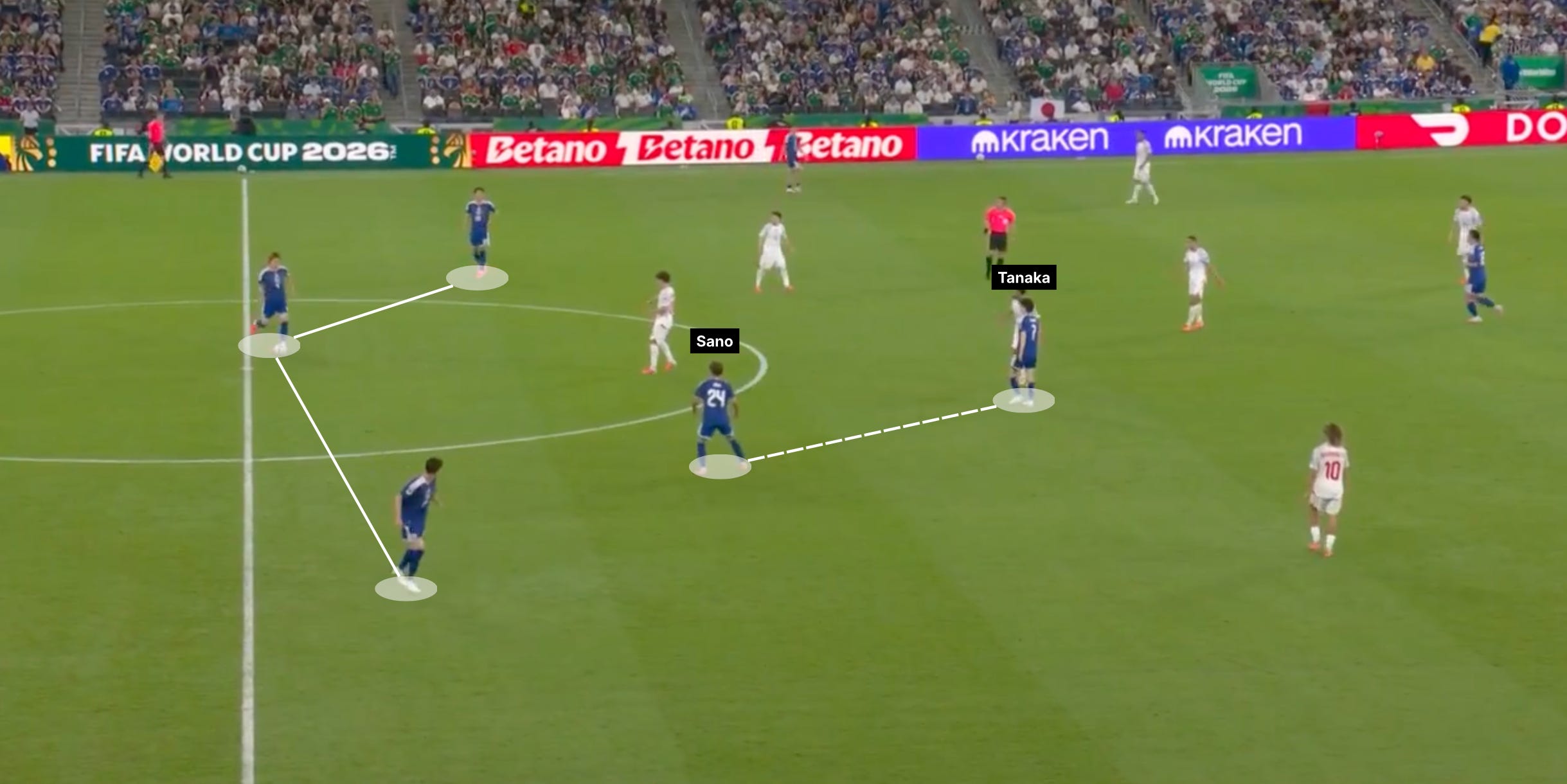
This plays into a general principle of reduced distances. You reduce the ground one midfielder has to cover to drop into the back line, as well as reduce the distance the CBs have to cover via a pass, given a midfielder is deep and ready to receive already:
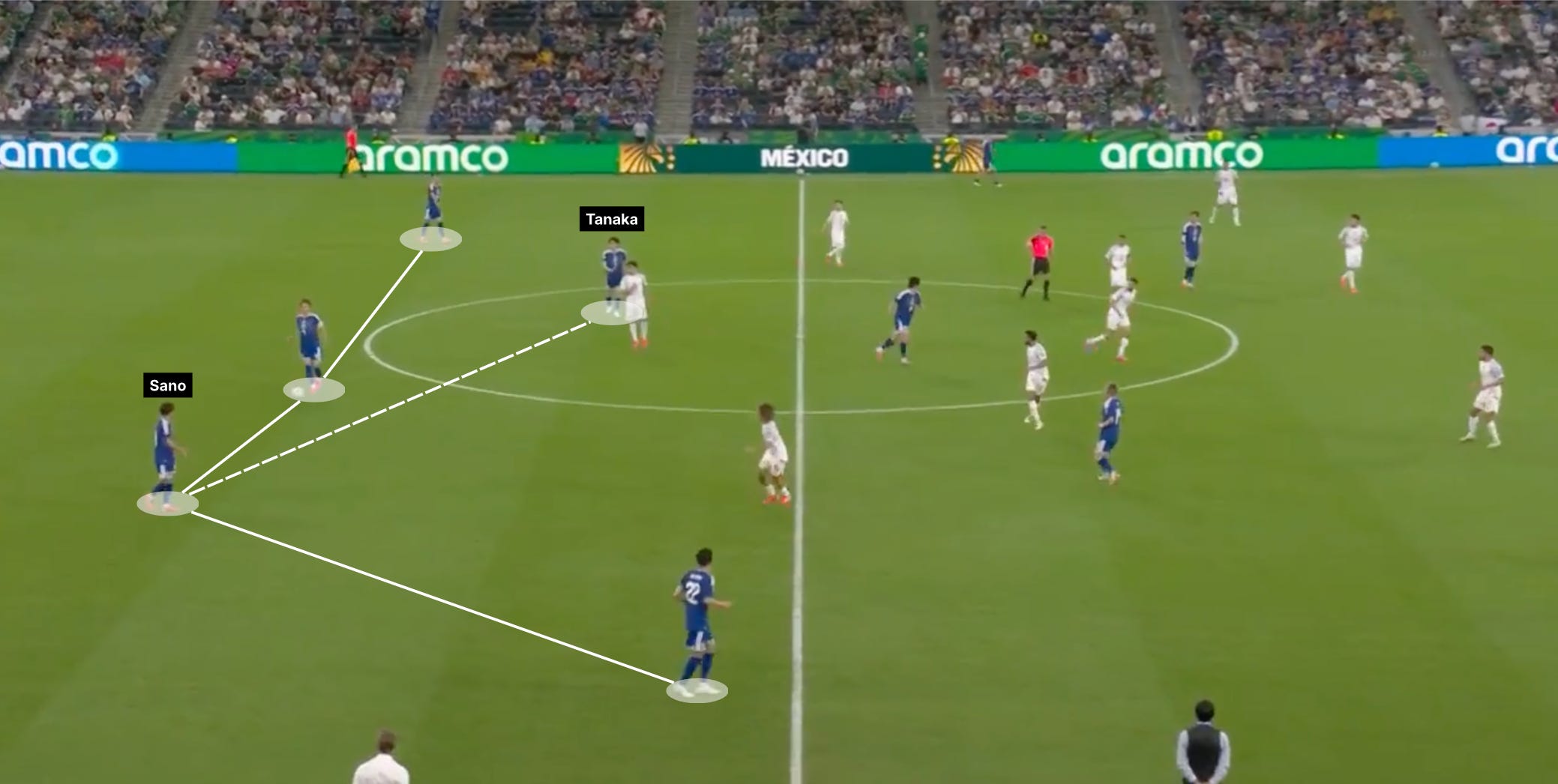
And then the midfielder can push into the space he vacated along with the rest of the defensive line, therefore exerting more pressure on the opponent's mid block:
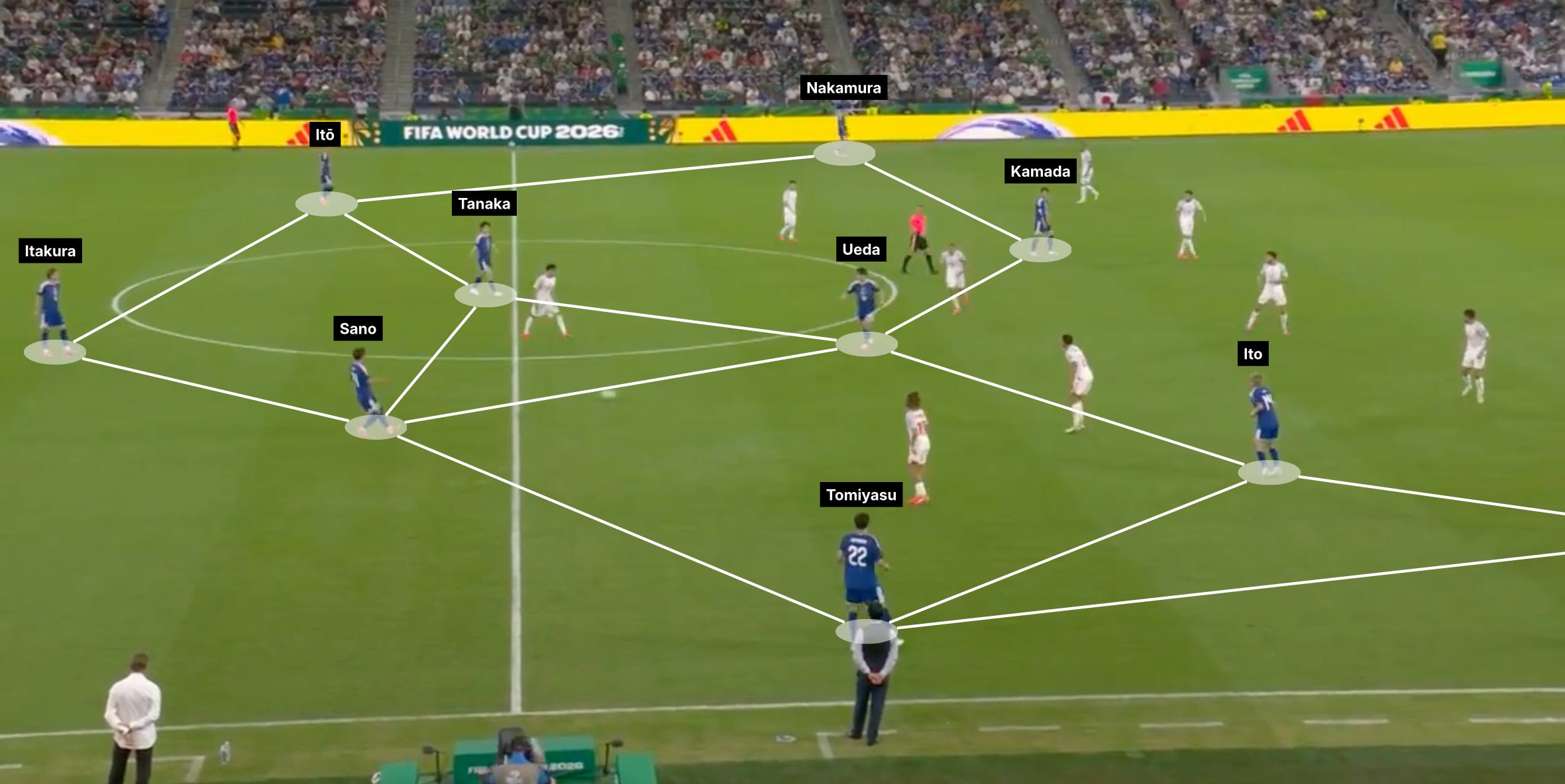
This is a good representation of their principles → structure, actually:
— Wide CBs stretching the pitch
— A staggered midfield, with one midfielder dropping into the back line
— Ueda dropping deep as the CF, in close proximity to the 10s for a give-and-go (see his assist for the third goal)
— 10s and wingbacks fluid and willing to rotate
Controller - Playmaker Dynamics
This [back four] entire movement is characterised by a midfielder dropping into the defence, giving the outside CBs time to drift out wide. The movement can further be broken down into two dynamics.
When the midfielder drops, he can broadly behave as either a) a holding presence or b) a playmaker. We’ve seen Japan use a pivot of Wataru Endo and Kamada in the past, with Endo usually playing safe passes and allowing for more dynamism from his outside CBs. Kamada, meanwhile, would try to speed up play and generally stretch the pitch from the back.
This dynamic was broadly imitated by Tanaka and Kaishu Sano.
While I wouldn’t say either were extraordinarily adventurous with their passing, the biggest difference came in the speed with which they got the ball out of their feet. Tanaka’s progression was limited to roll-ons with his sole. He’d bring the CBs higher with him, linger on the ball, then make safe passes to the outside CBs, who would then speed up play.
Sano, on the other hand, would generally move more with the ball, triggering rotations around him and opening up space to pass ahead of him, thereby raising the tempo by proxy — much like what we’ve come to see from Kamada:
*(Sano wears the no. 24):
I find the nature of this dynamic to be quite interesting, as the first half consisted almost exclusively of Tanaka dropping deep, whereas it was Sano who dropped deep in the second half.
Perhaps it’s just a game-state thing: Tanaka dropped deep in the initial stages, when the match was naturally tighter and edgier, whereas Sano dropped deep once the game had started to open up and Japan had the momentum of two goals behind them.
This uncertainty does make it hard to press either one of them though, which is useful in terms of manufacturing uncertainty.
Tunisia’s Passiveness
I do think at certain points Tunisia's reluctance to press Japan's CBs let slip a few opportunities to win the ball back high → shoot:
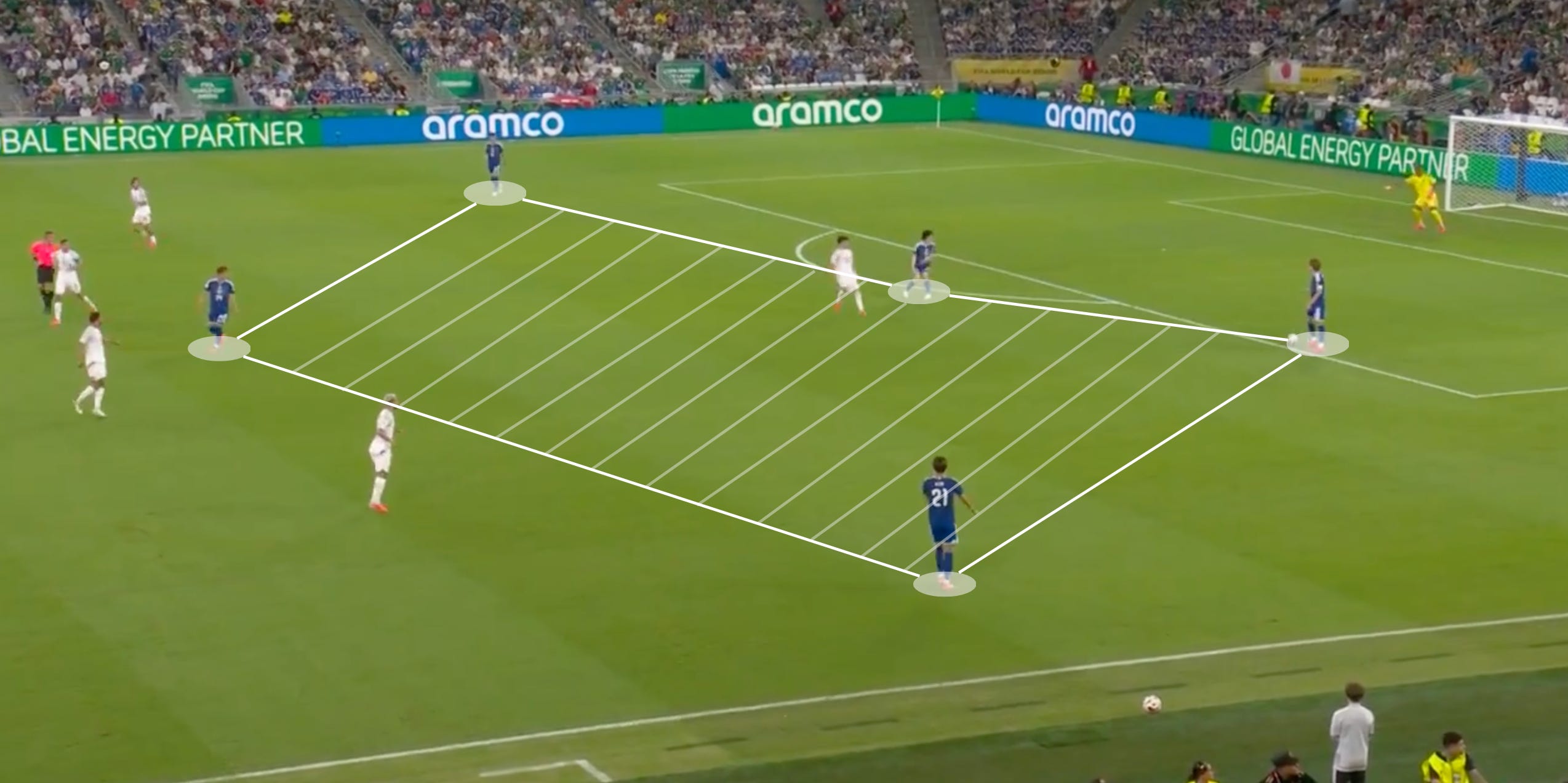
Japan’s distances in these initial phases just weren’t great, and could’ve easily been exploited. Zion Suzuki often had to linger for far too long on the ball too, as players rotated around him, but those rotations happened without really keeping options open for him, which is kinda counterproductive.
Tunisia also found themselves being dragged out of position on a frequent basis, naturally isolating either flank. For example:
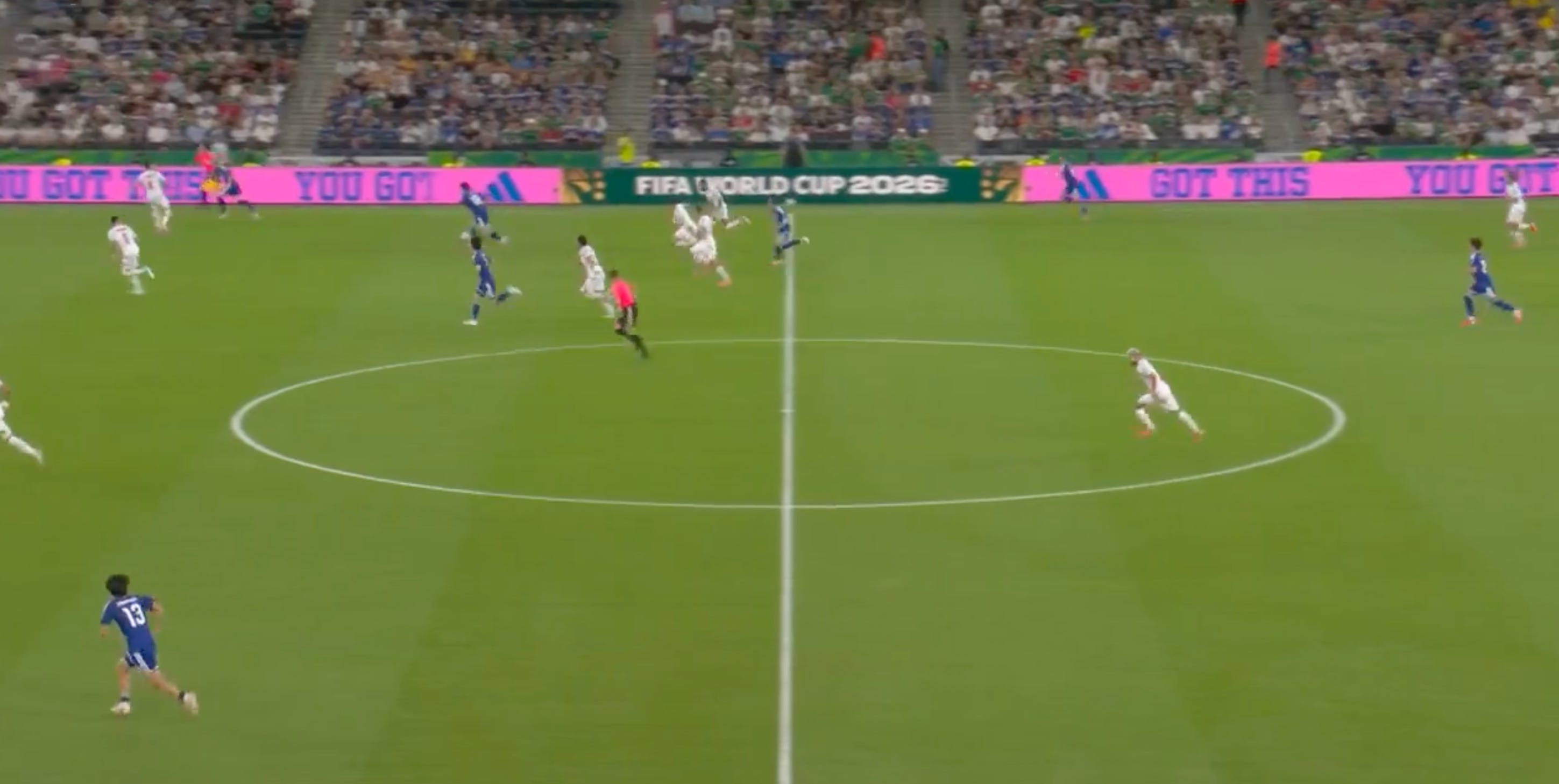
Meaning Nakamura can receive the ball here, whilst being uncontested:
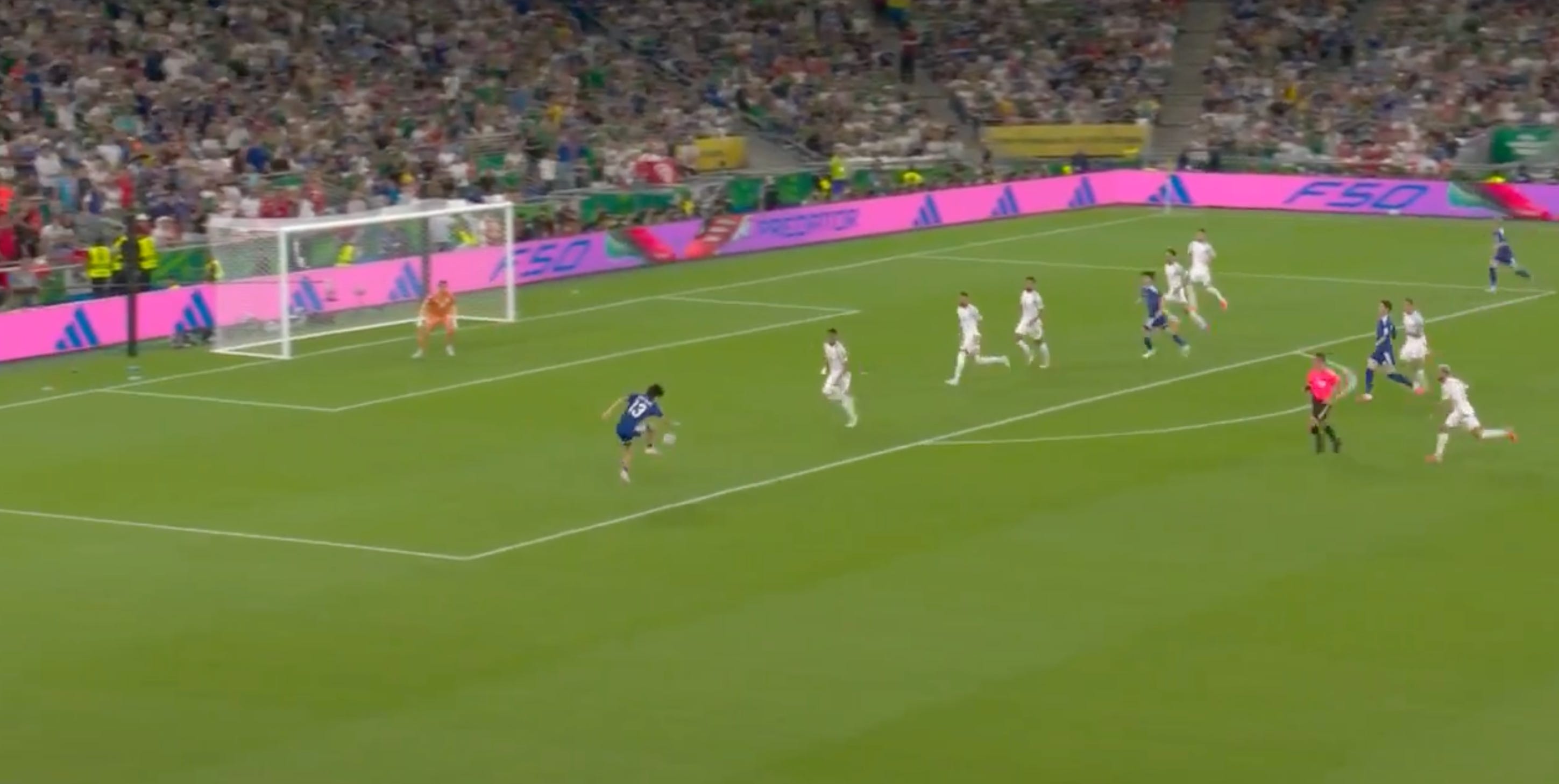
Outside of the defence in the first phase, Japan’s players are rarely static. Consequently, it gets too hard to man-mark Japan without getting dragged out of position and into Narnia, so I can give Tunisia some sympathy in this regard.
That said, this also means they should’ve been more threatening in transition, so I take away my sympathy.
Volume of Runs
That said, even though Tunisia afforded Japan plenty of space, I cannot overstate the efficiency with which Japan’s movements created space for themselves. Take this phase of play for example:
J. Ito sees a pass being played to Tomiyasu:
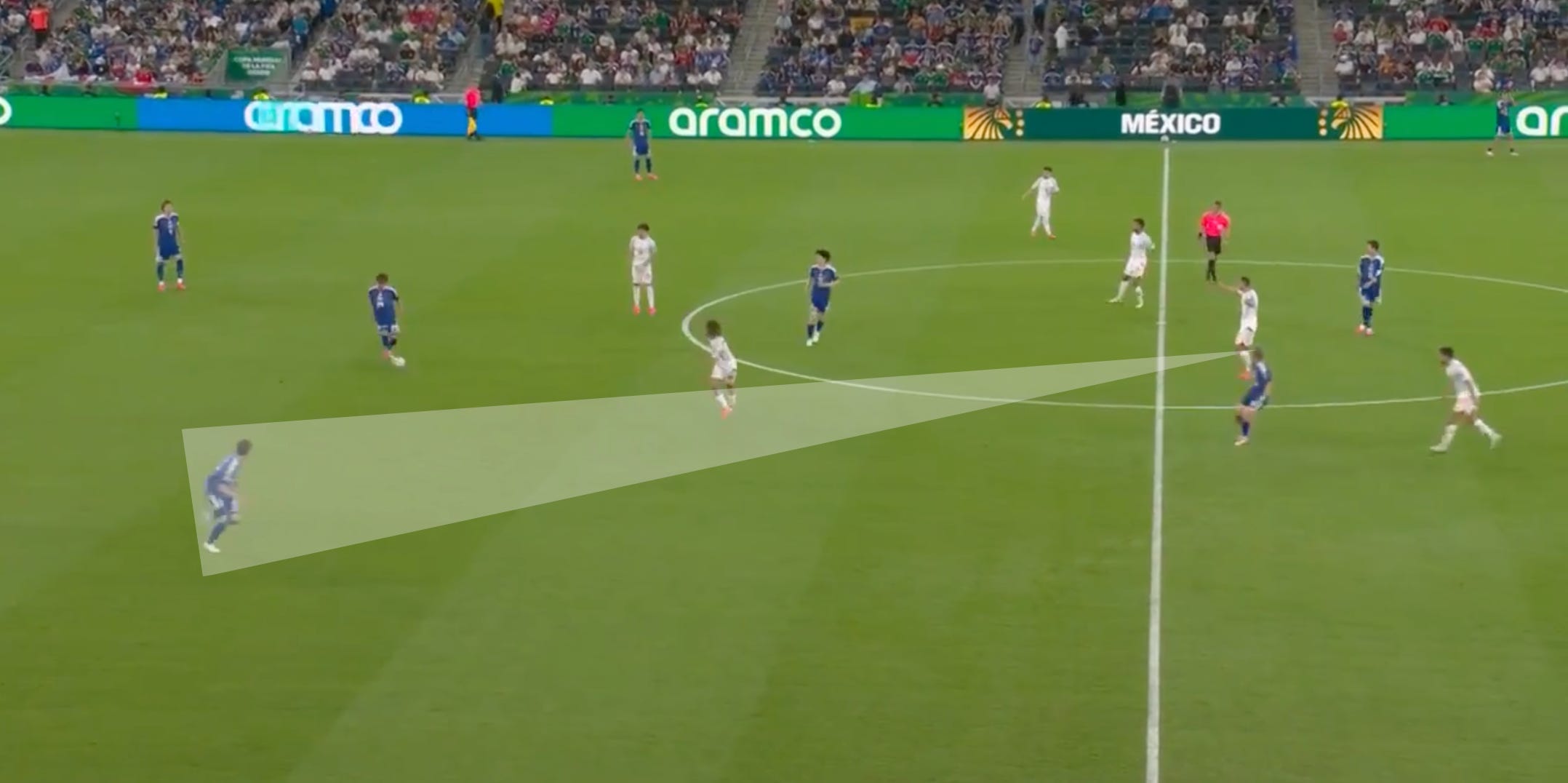
And immediately swivels, making a forward run in anticipation of a through ball onto him. In the process, he drags Ellyes Skhiri out of position:
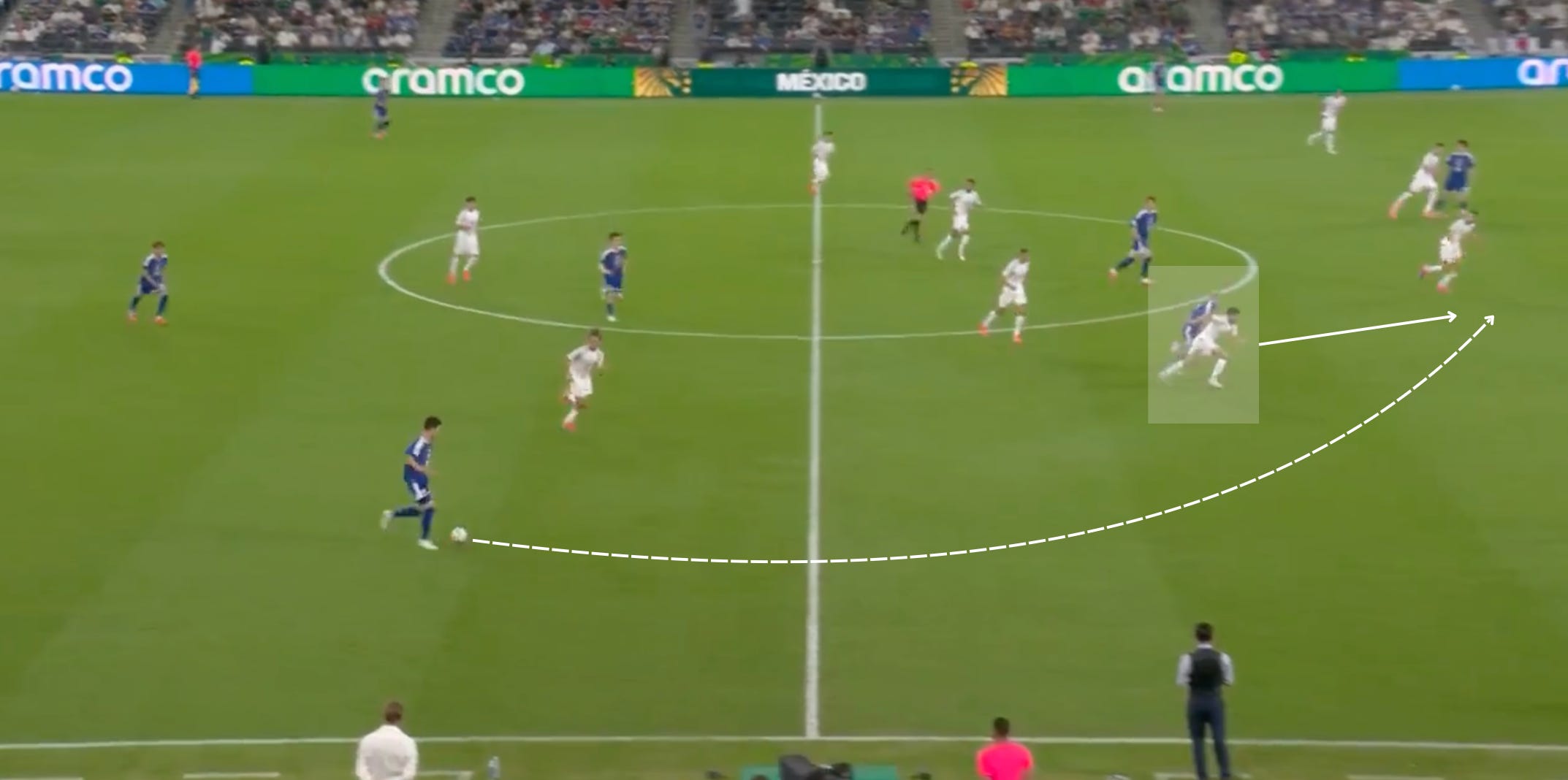
Which then opens up an easy passing opportunity into Kamada:
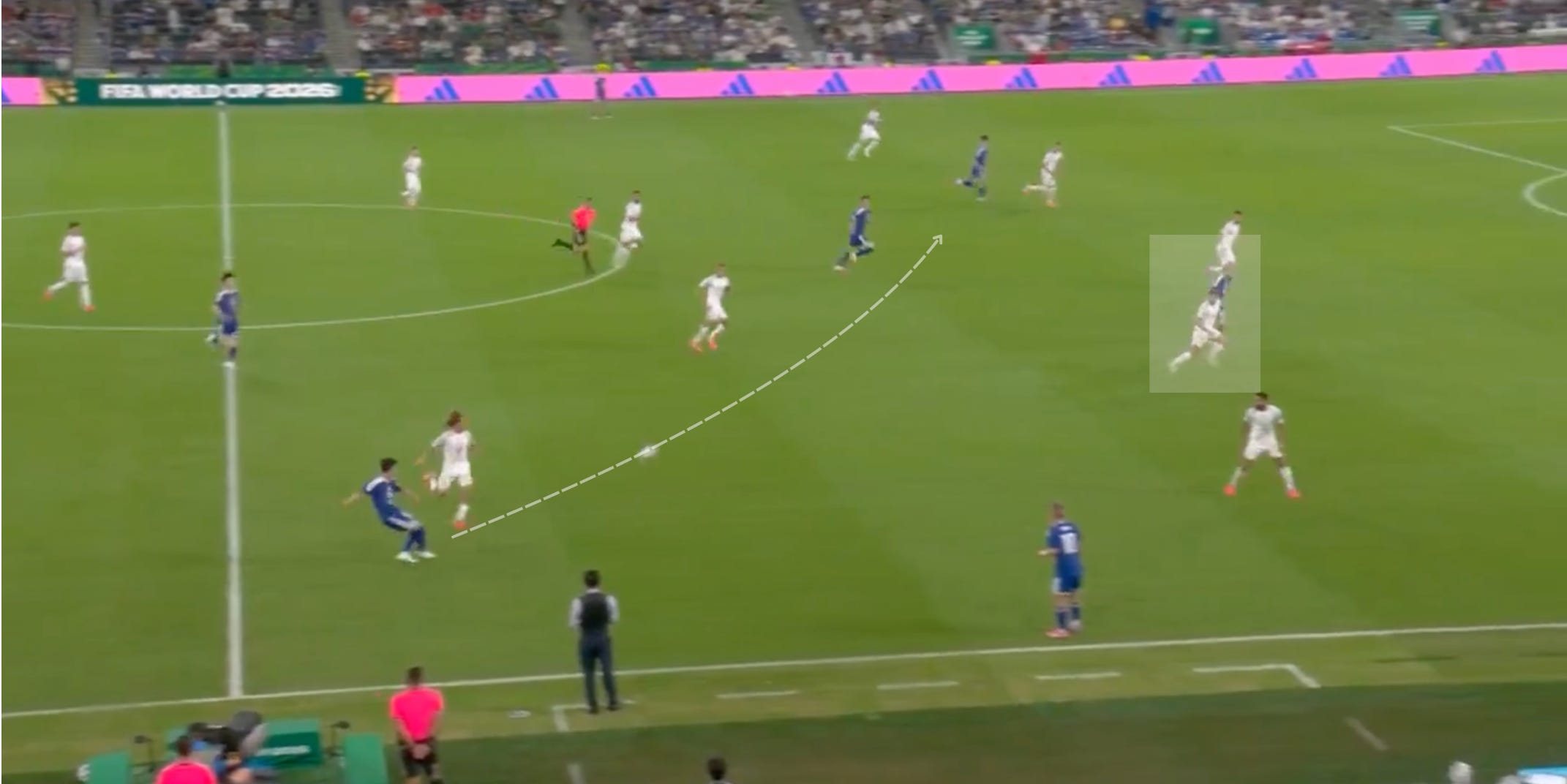
Who then has two passing options of his own:
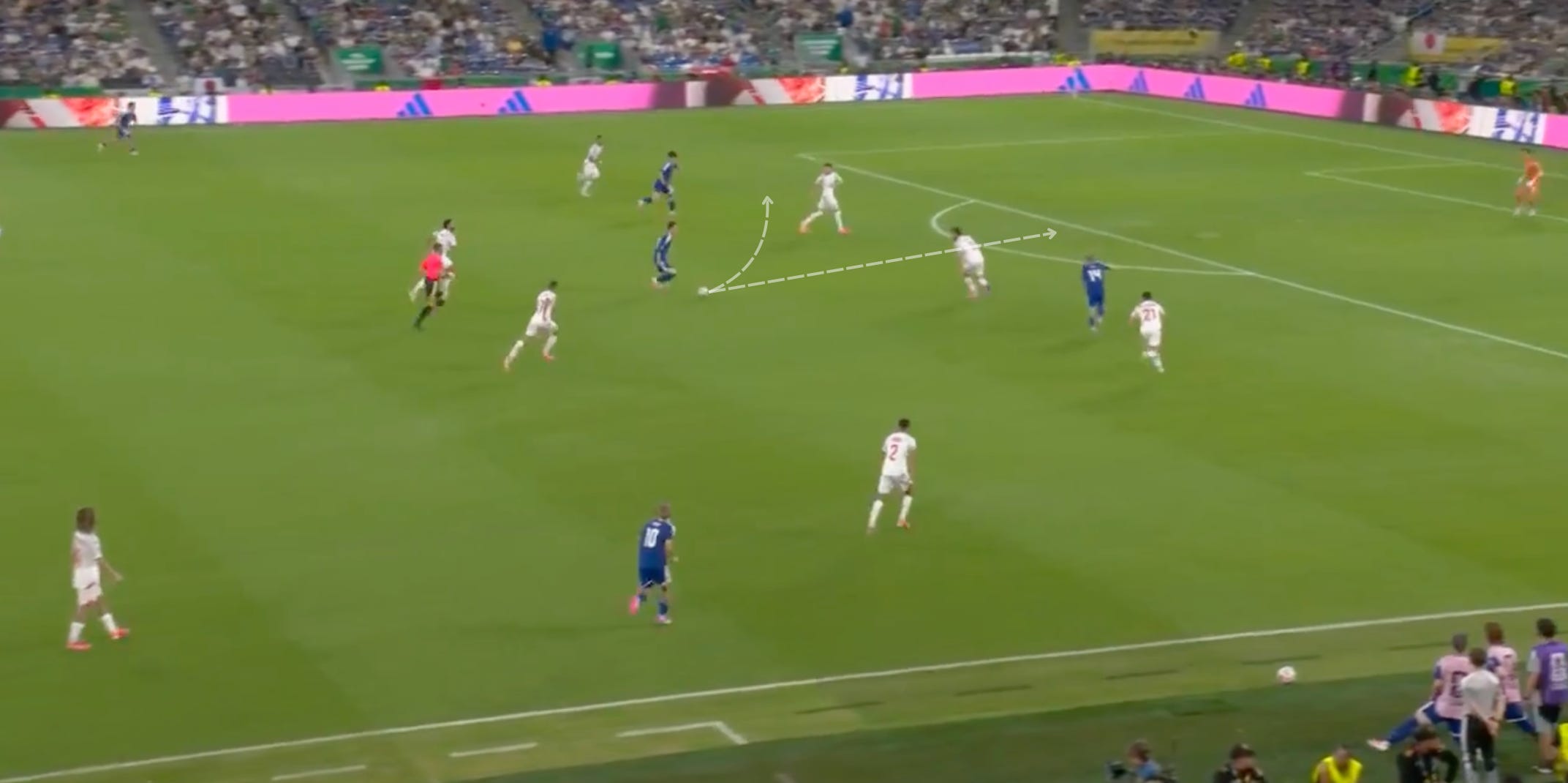
This stems from a general willingness to disrupt control by actually making runs in behind, which is something that would have benefited other teams in this tournament (cough, cough, Turkey).
This also means that Japan’s play is generally very forward-facing. Even if their wingbacks drop back to receive the ball, the midfielders underlap and run forward. If the wingbacks make a forward run, a midfielder will drop deep to help get the ball to the wingbacks. In essence, at no point is Japan’s entire motion pointing backwards, a problem Sweden often face because of their static pivot.*
*The pivot sorta needs to be static considering how one-dimensional their attack is.
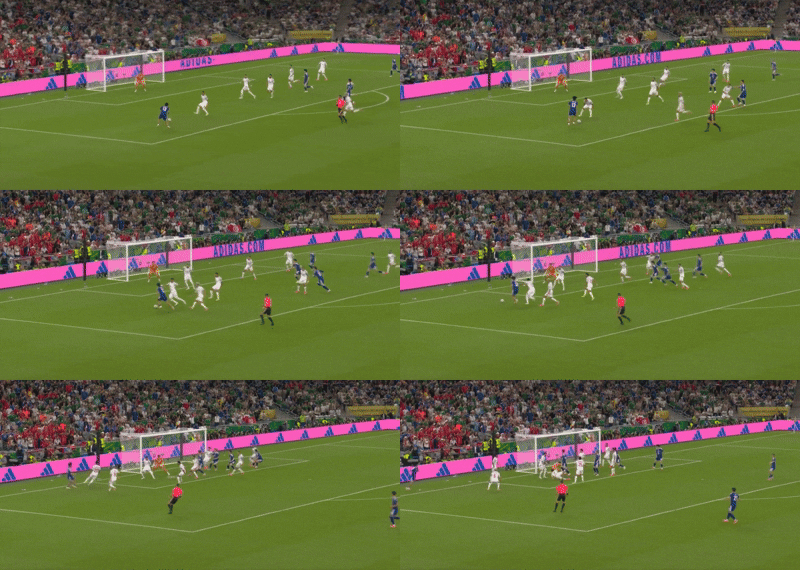
This willingness to run also extends to crashing the back post:
And even to wide runs that stretch the pitch:
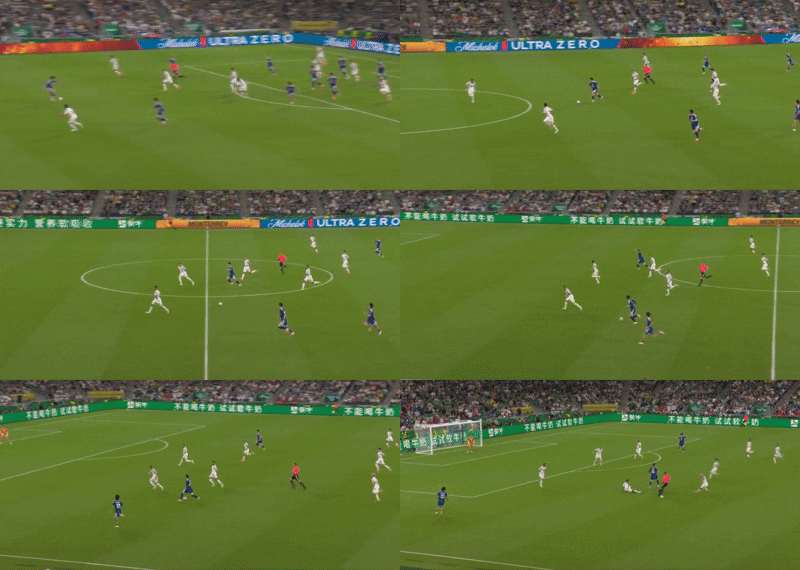
It even created Japan's second goal. Ueda picks up the ball here, and is surrounded by four of his team-mates making surging runs forward:
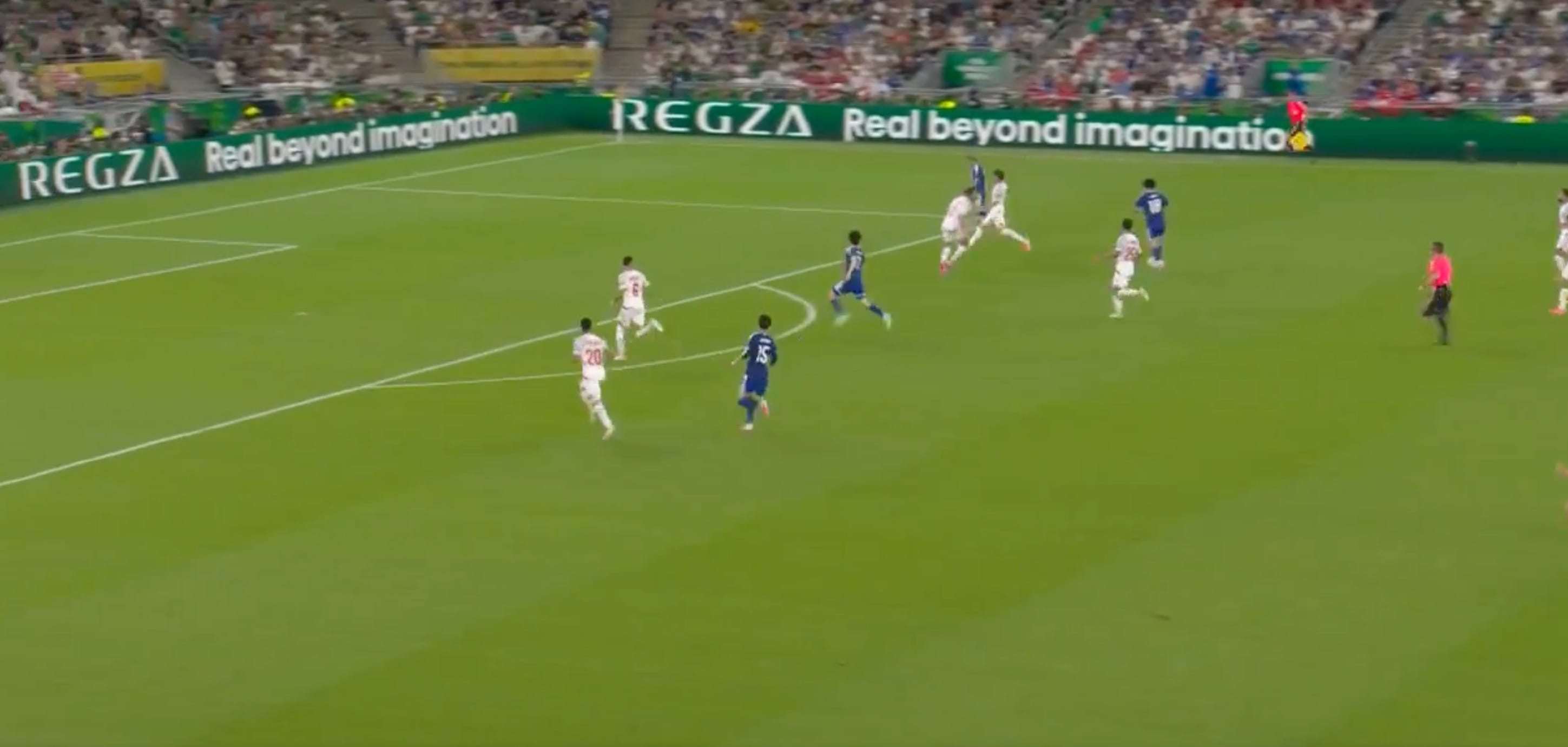
At this point, to the goalkeeper, the least probable outcome is Ueda shooting instead of passing. He shoots anyway. He scores.
Ayase Ueda
Ueda impressed me at numerous points throughout this game.
Acceleration → deceleration; using the backward momentum from decelerating to push back his marker:
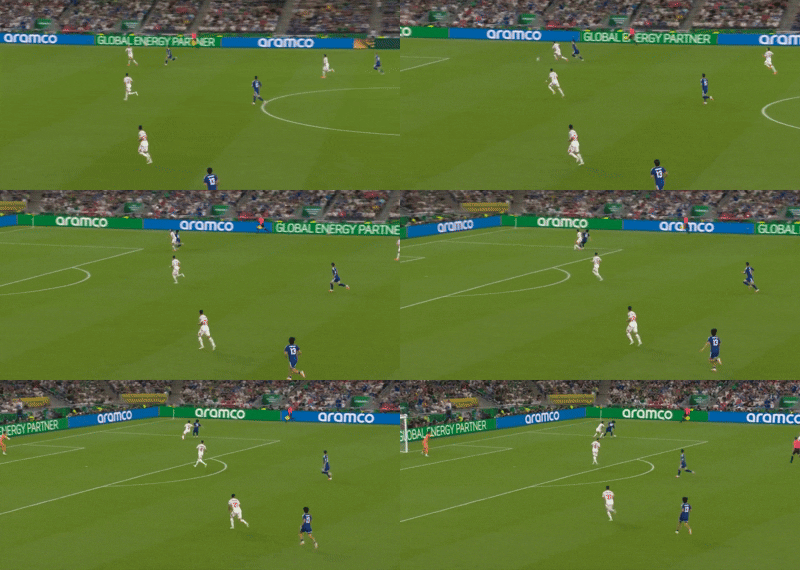
Good back-to-goal play; strong core, low centre of gravity (almost like a squat), arm pushing his marker back.
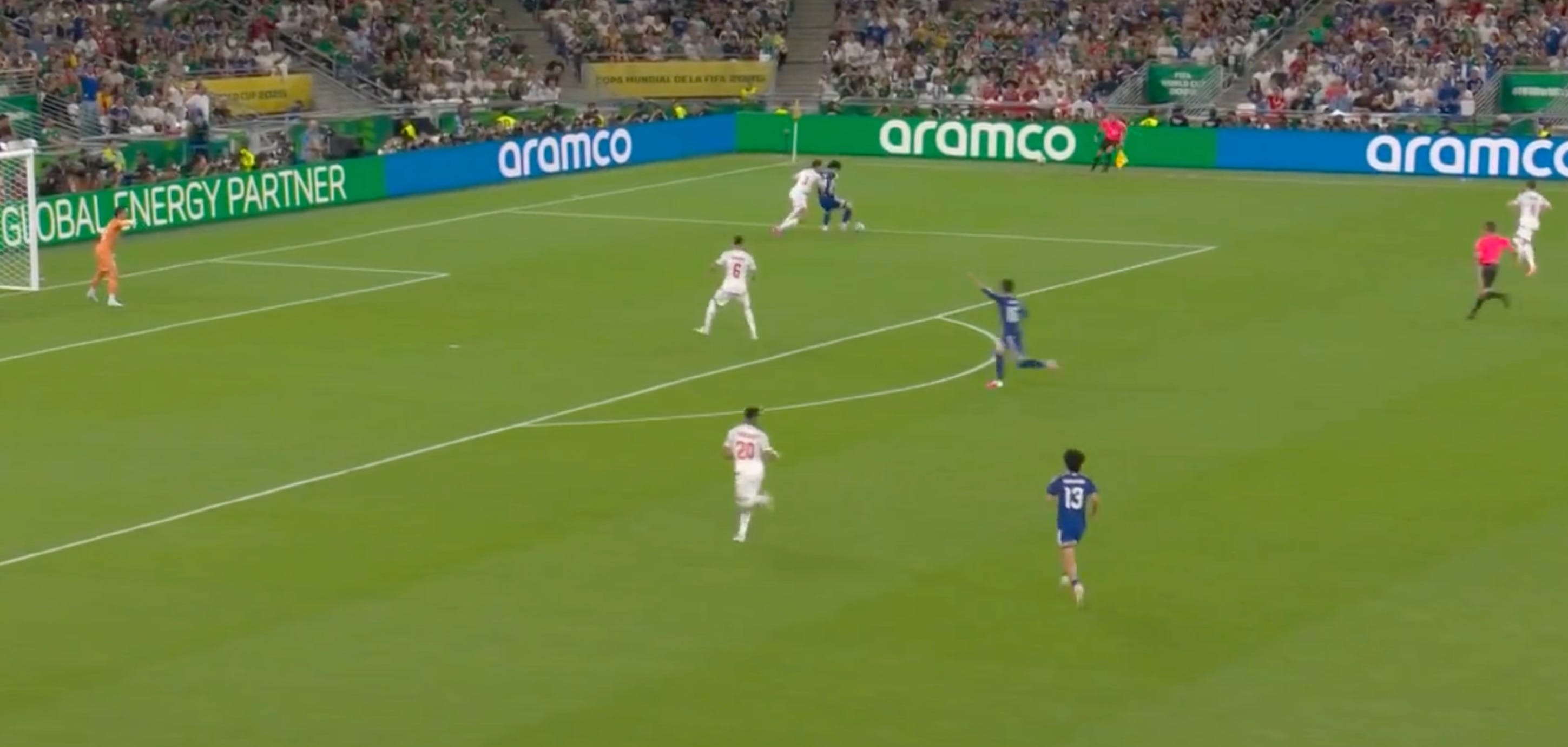
Ducks under contact, swivels → drives in one motion:
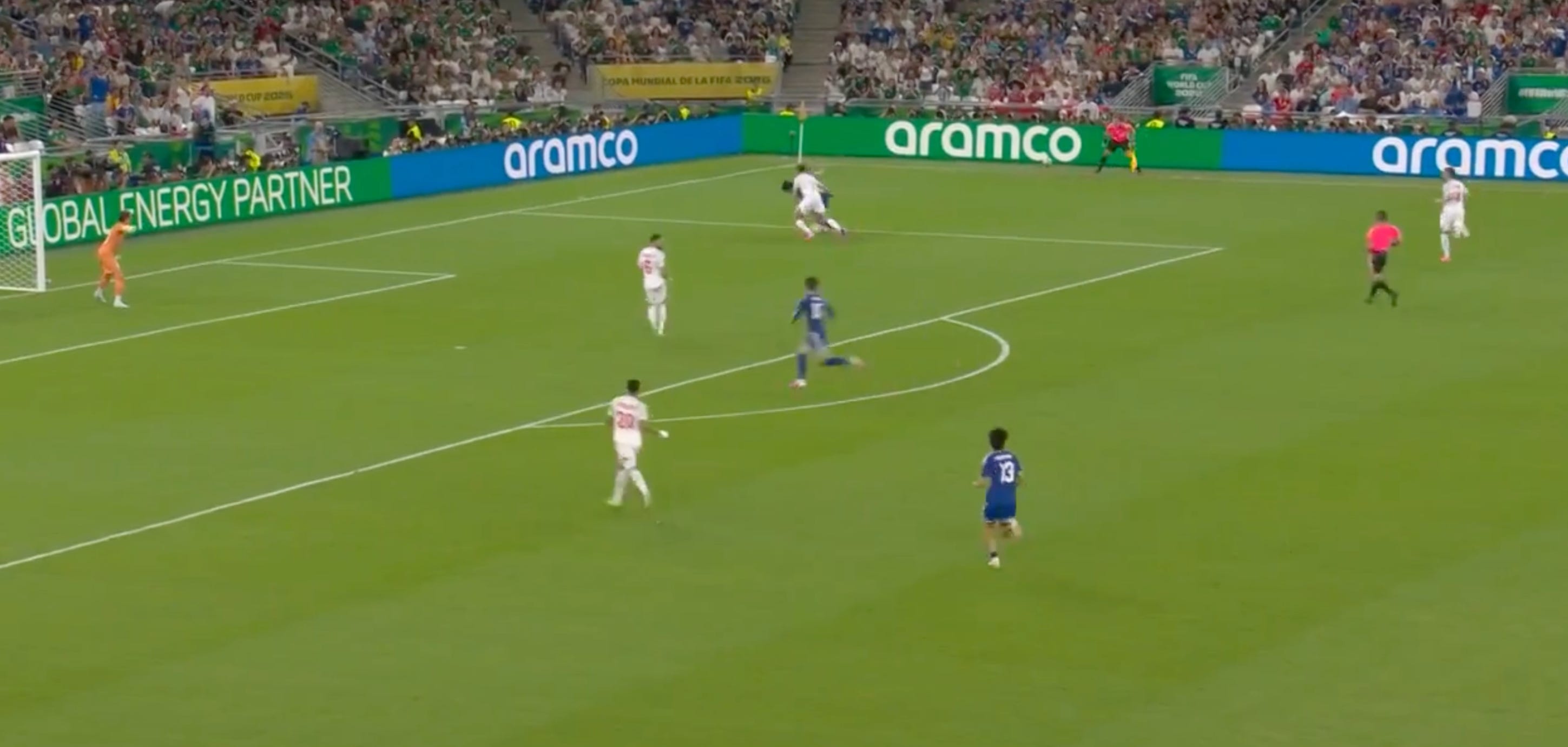
Before playing a darn good ball across the box:
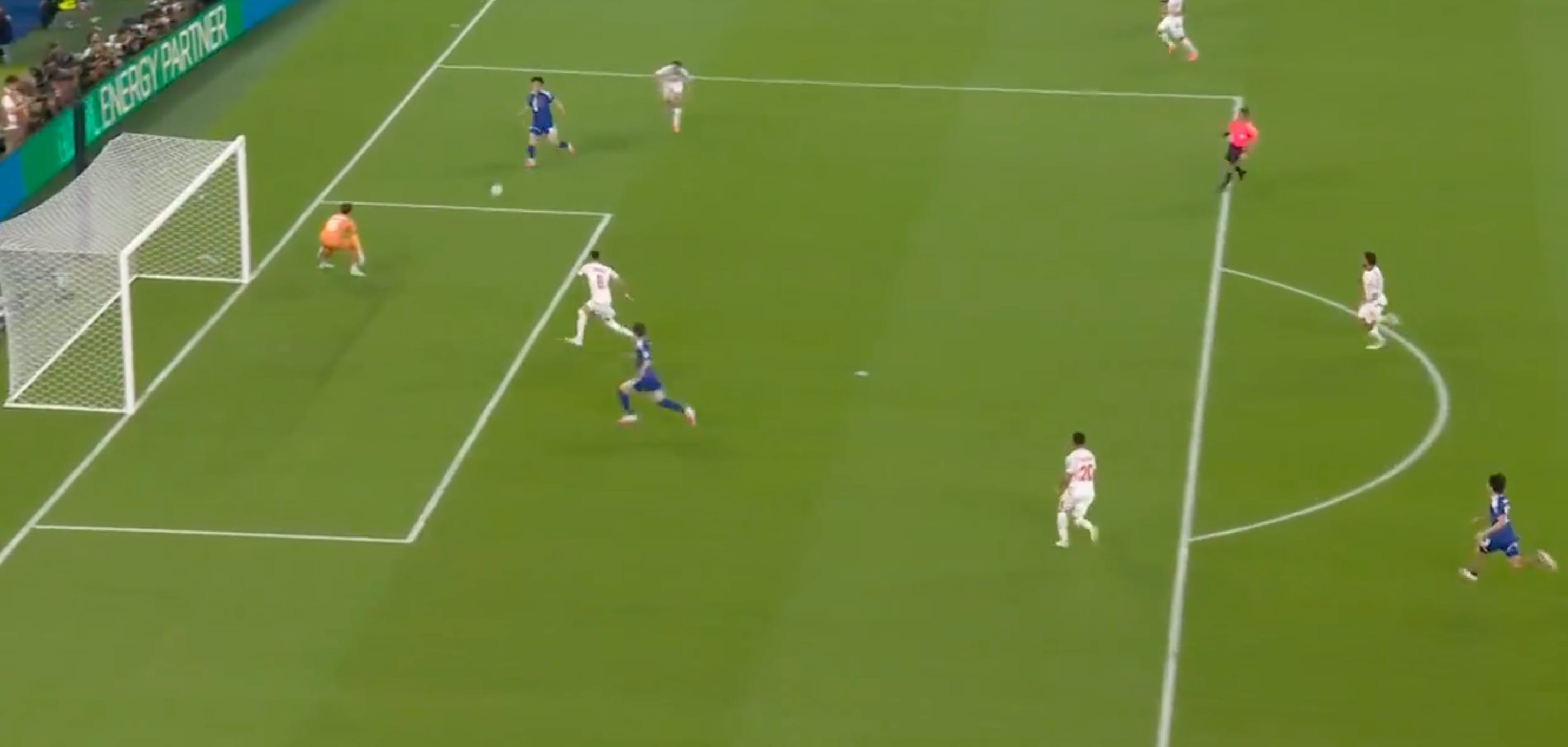
His work for Japan’s second goal was just as good. And here I must once again mention the benefit of shooting between the defender’s legs:
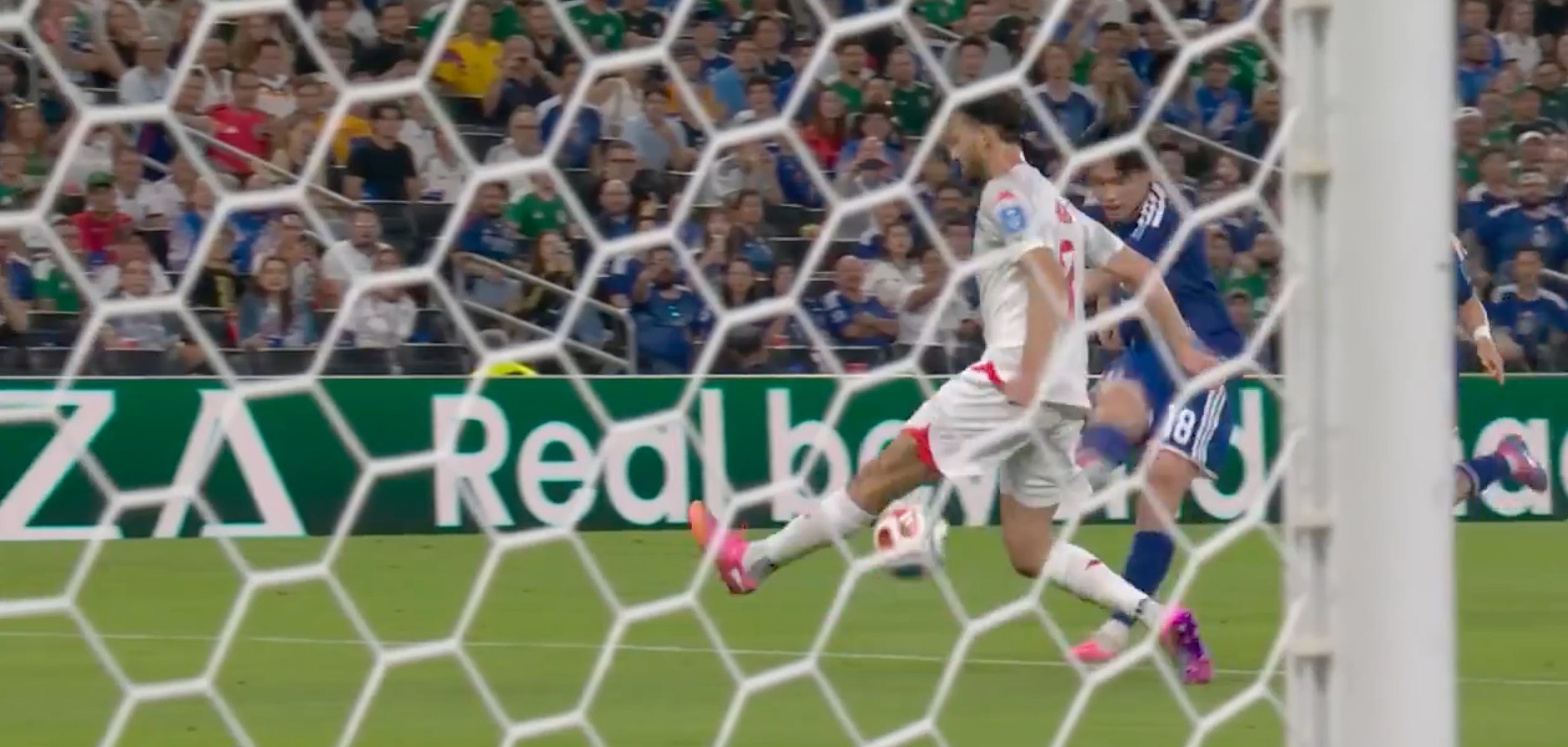
— As the goalkeeper, you have another body between you and the ball
— Consequently, you lose all contextual clues and can’t read the attacker’s body language
— The ball travels through a small gap, where it could quite easily take a deflection and change direction
Self-Sufficiency Without the Ball
Japan’s out-of-possession shape rotates between a 5-2-3 and a 5-4-1 depending on where the ball is:
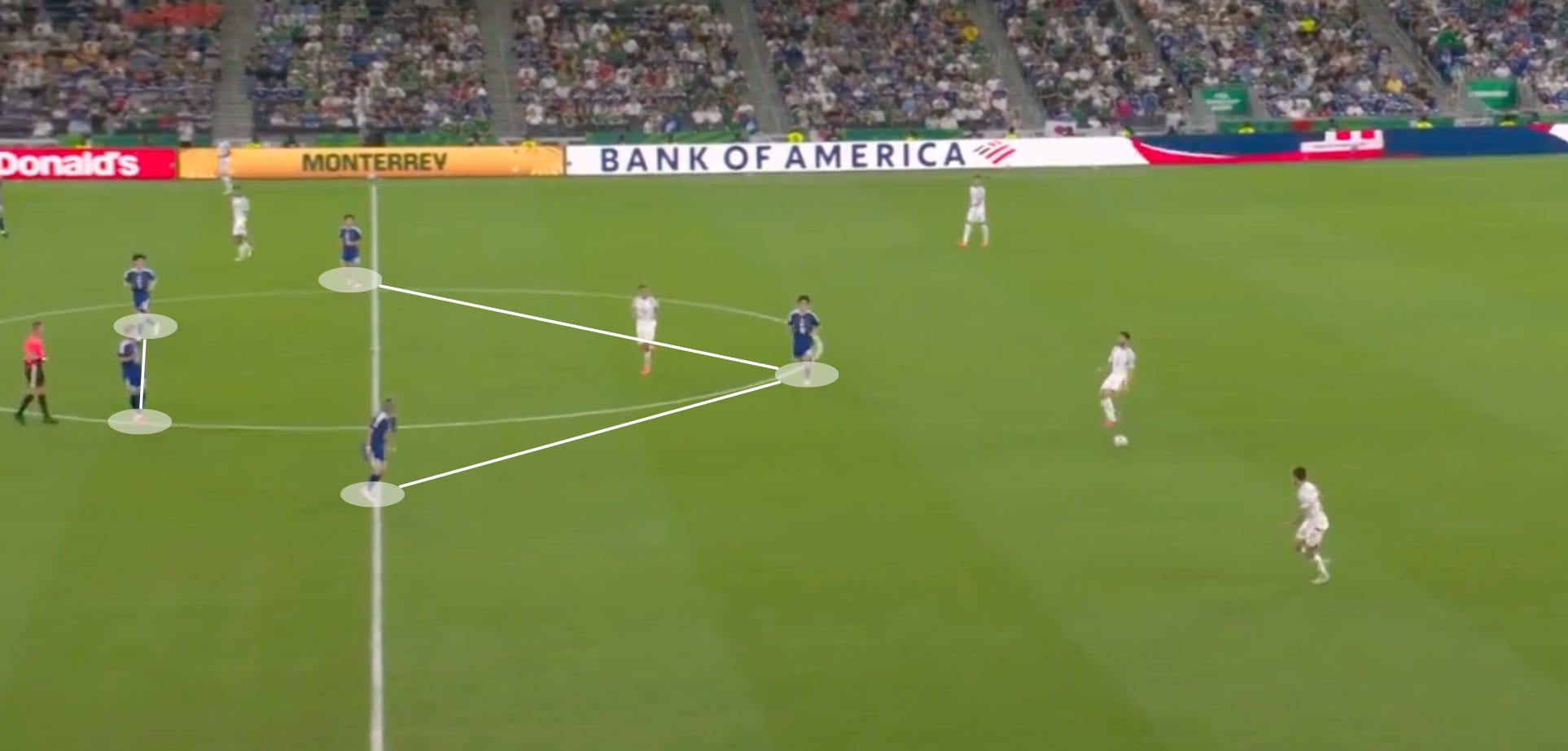
With the 5-4-1 occasionally becoming a 5-3-2 with the left-sided 10 (Kamada) pushing up.
The plan is essentially that Japan drop into a 5-2-3, making the middle of the pitch and the half-spaces as compact as possible. Once the opponent cycles around the middle and goes to the flanks, Japan drop into a 5-4-1 to squeeze them back inside.
It’s a well-thought-out and generally self-sufficient scheme, but diagonals can pin them back, especially if you have a fast winger who can cross into a tall striker.
What’s Next for Japan?
I like a lot of Japan’s in-possession work. The rotations are fun, the runs are nagging and constant, and the players play with a certain dynamism and energy that have clearly been instilled from the top-down as well as culturally. I think these principles will take them far.
There are, of course, a few question marks that this style of play raises, i.e., Japan’s competency in breaking down low blocks (or opponents that don’t jump at their triggers), as well as their ability to defend fast transitions once they lose the ball high — something that’ll only become more damning as the level of opposition scales up.
On the whole, and considering the injuries they’ve faced (Kaoru Mitoma, Endo, Takumi Minamino), Japan’s performances deserve all the plaudits they’ve gotten.
Even if they rotate, I wholly expect Japan to still beat Sweden*, and whilst the ro32 presents a difficult matchup in Brazil/Morocco, Japan should still give a good account of themselves.
*I have far more criticisms of Sweden’s play than I do Japan’s, and I think Japan are well-positioned/compact enough, to take advantage of Sweden’s flaws. You can read my report on Sweden here:

And that brings us to the end of this piece. Thank you, ありがとうございます, for sticking around. If you haven’t already, please consider subscribing (it’s free):
And sharing this with a friend:
Take care, and enjoy the rest of your week! お体に気をつけて、残りの一週間も楽しくお過ごしください。
If you’re interested, here’s more of my work:


Nice 👍
Really like this mate especially that I have taken an interest in Japan as being a Leeds fan and since we signed Tanaka for around £3M