

Arsenal want Mateus Fernandes. Manchester United probably didn’t know they wanted Mateus Fernandes until they saw what Bruno could do and thought, hey, buying another Fernandes can’t hurt.
If that is, indeed, what they thought, then United would be right. But Mateus Fernandes isn’t the finished product. He’s good, yes, but how good? And how can he improve?
Let’s take a look.
📚 Contents
Note for email readers: This email may be truncated. To read the full article, please click on this link or the link to the right of [Message clipped] note at the bottom of this email.
Passing vs Carrying
It’s pretty evident that Mateus Fernandes can pass the ball and that his passing range is large and varied. It’s ultimately with this passing range that he’s able to exert his influence onto football games. Broadly, if we were to categorise midfielders into two groups based on how they maximise their Zone of Influence (ZOI):
Midfielders who cover ground with the ball; carrying
Midfielders who cover ground statically first (the ball travels); passing
Fernandes falls into the second category. This isn’t a good or bad thing in isolation. Ultimately, no footballer falls into just one category. However, one trait of theirs is usually good enough that it overshadows the other, meaning they become so comfortable within it that they can overlook the possibility of turning to the other.
Of course, it’s a different matter if one particular action is their first instinct. In such a case, it’s best to go with said instinct, because, as a coach, your job is to play players to their instincts. But, regardless, as a player, it’s good to have both methods — and to be able to rely on both methods — in your locker.
And Fernandes has both.
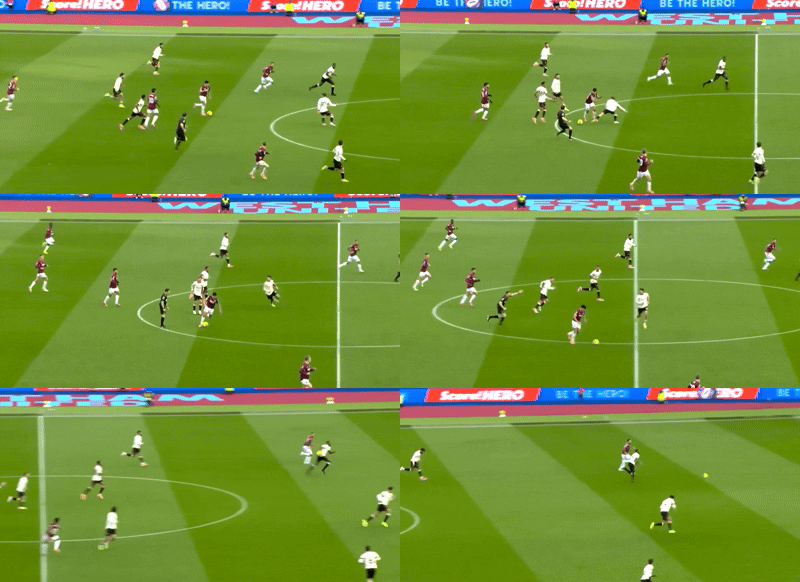
But before I go on to the carrying/dribbling side of things, another issue “deep-lying playmakers” or just ball-dominant centre-backs (cough, Jérémy Jacquet red flag alert) often face is that of a weak lob.
The Looooong Game
When you’re switching play or are generally trying to thwack the ball upfield for a side that doesn’t dominate possession and has to counter quickly, you cannot afford to play a floaty lob too often. If you do, it becomes rather easy for your opponent’s CBs to jump their defensive line and win a header (given it’s a tendency for CBs to track the ball more carefully than their counterparts), or for a FB to block off passing lanes to your wingers.
So I’m encouraged by the fact that Fernandes’ lobs generally travel quick and reach their target on a frequent basis.
The Empathetic Side of Football
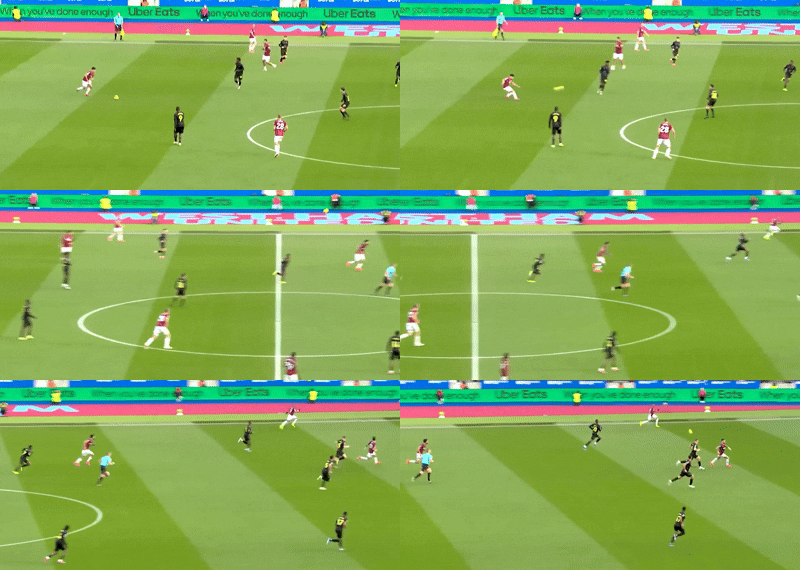
I also really like the concept of “passing empathy”. While you can largely dilute it down to weight of pass, it does introduce a kinda relational aspect to football, which is quite nice, especially given the need for combinatory movements from midfielders.
Essentially, you see how your teammates like to receive the ball, and you pass it to them in such a manner.
And, well, Fernandes’ passing is the most empathetic being (?) this world has ever seen.
His passes to feet largely travel with just one bounce and rarely bobble at the point of reception, which would make them harder to control. His passes to feet are rarely overhit, because being overhit takes away from the immediacy of that action. They’re also not underhit, because if they were, the receiver would just have to start from zero again.
They’re. Empathetic.
A Willingness to Receive
Another facet of Fernandes’ game that really encourages me — especially given it shows maturity that you wouldn’t necessarily expect from a 21-year-old midfielder — is his willingness to receive the ball… anywhere?
Regardless of whether you’re defending close to your own goal or are running through combinations near zone 14, Fernandes will make himself available as a passing option and will bail you out of pressure.
A lot of this comes down to just how good he is in tight spaces. Given his obvious quality on the ball, West Ham would frequently give him the ball when they need to progress upfield. Consequently, the opponent would press him, especially as he’d often receive close to goal, where forcing a turnover could, quite conceivably, lead to you getting a shot off.
BUT, Fernandes would, more often than not, wriggle away and around his marker as a way of opening the pressure valve.
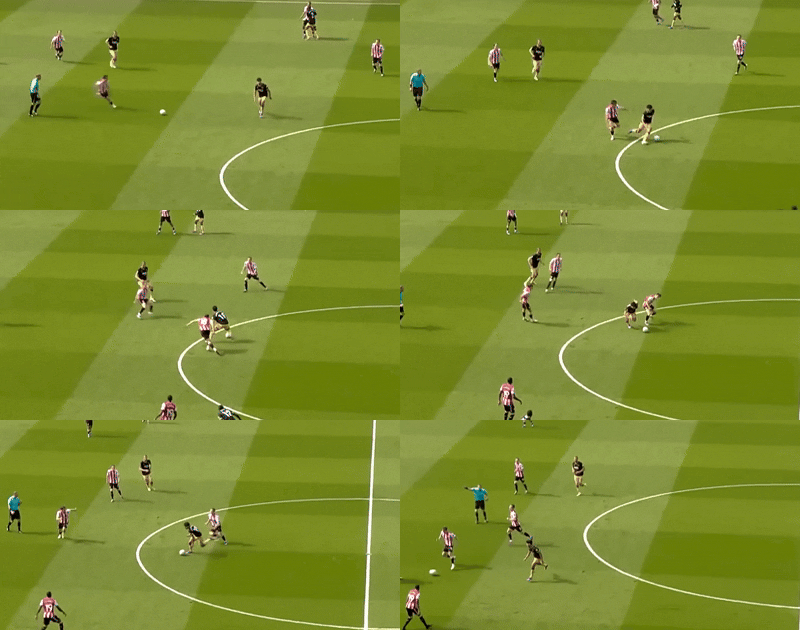
While this is hard to quantify, as someone coming up against Fernandes, you then have two broad choices:
Either you can press him aggressively and hope you win the ball back. However, you risk him quite literally running circles around you.
OR
You wait for him to run onto you, from where you try to use his momentum against him to push him back and win the ball. But his passing range is good enough that he can play a ball in behind while you wait.
And he’s done just that.
And now Jarrod Bowen is through on goal.
And West Ham have just scored.
And your fans are booing you.
And bubbles are blowing.
CAN THINGS GET ANY WORSE?
…so yeah, it’s a bit of a nightmare figuring out how you press Fernandes (unless you’re a certain type of player, which I’ll get into in a bit).
A Sneaky Way of Dictating Tempo
A few sections up, I said this:
His passes to feet largely travel with just one bounce and rarely bobble at the point of reception, which would make them harder to control.
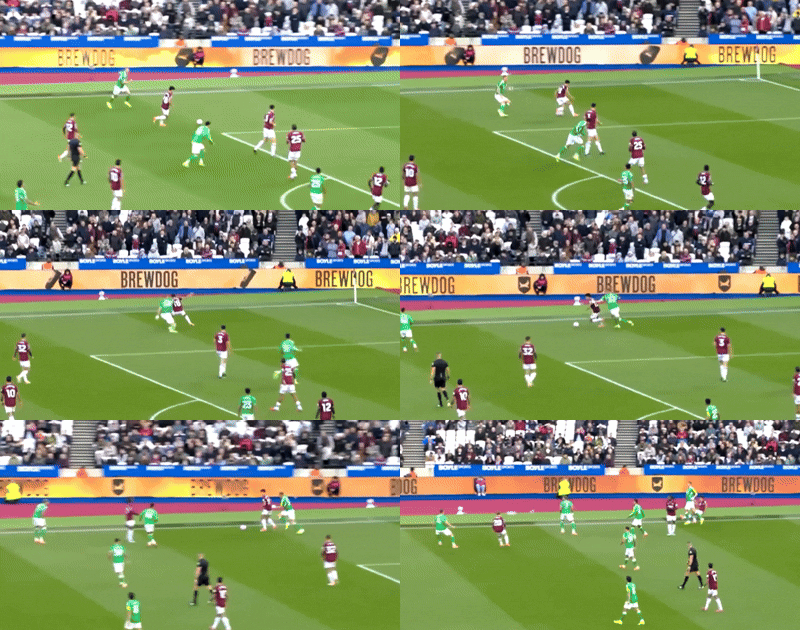
Now, something that stood out almost immediately to me regarding Fernandes’ game is the fact that this close control in the context of bobbles is really, really good. He’s able to clamp down on and kill off those unpredictable bounces really quickly, which helps in a couple of scenarios:
You kill off the bobble and have the ball in your control. You look up and see your striker hanging off the shoulder of the opposing CB, ready to make a run in behind. You get a pass off quickly, before anyone could’ve expected it, as the ball was literally flailing like a wild animal a second before.
You kill off the bobble and have the ball in your control. Play was frantic, play was messy. You lay the ball off to a teammate and reset play. Audiences gasp, as you have just… SET THE TEMPO.
Ooo la la. That makes me smile.
Mateus Fernandes, you didn’t just clamp down on that bobble; you clamped down on the part of me that seeks control in chaoticity, and finds the same in patternistic football.
This does largely fall into general ball control and having a good first touch, but hey, it’s different when you’re defending centrally on an island, as opposed to standing on either flank, protected by the touchline.
Defending Space
I’ve seen people complain about Mateus Fernandes’ defensive positioning, and that intrigues me, because I have defensive efficiency down as one of his main strengths.
So, for the premises of this section, let’s just ignore his initial defensive positioning. Regardless of where Fernandes starts off, I’ve noticed that he blocks off passing lanes really quickly.
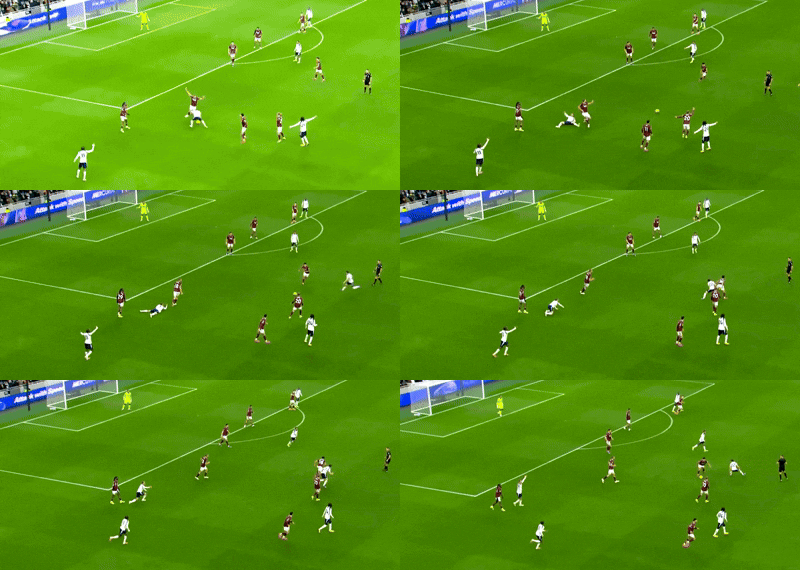
Fernandes frequently stands still (especially post-long ball, but that’s easily explained by him waiting to see where the ball → play has ended up), but doesn’t remain so for long. Consequently, he reads the pitch well and blocks off passing lanes pretty darn quick.
I think he loses some of this efficiency when running onto his man, as that can be slightly brute force-y, as opposed to the elegant beauty of defending right where you’re supposed to be, but hey, there’s nothing wrong with a good ol’ barge from your [sorta] defensive midfielder.
He’s still a little ways away, in a physical sense, from being a very reliable ball winner, but hey, he’s 21 and spent his time at West Ham defending ahead of some, well, questionable players. Yet he still won duels (especially high up the pitch), and goes from ball-winning → progression real quick, which is always nice.
Plus, he uses his body smartly when it comes to riding and/or inviting → absorbing challenges, so +1 points for doing well with what you have:
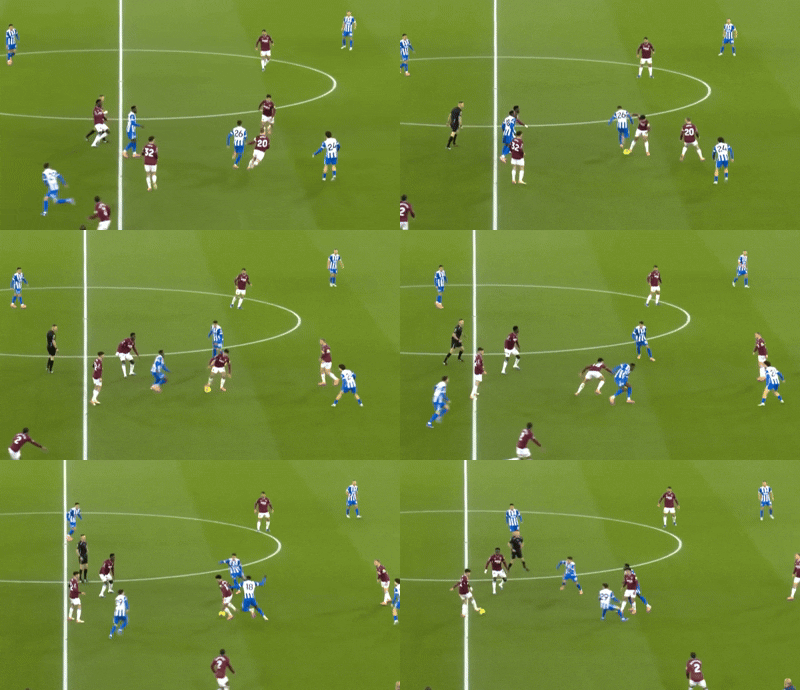
Edit: I’m looking back at some tape and wow, Mateus Fernandes is really, really good at dodging challenges [late; more deceiving] whilst still being aware of the ball at his feet.
How to Reliably Beat Fernandes
Speaking of physicality, this is one of the few concerns I have re Fernandes’ game. I feel like he can often fold when pressed aggressively, assuming he’s been pressed right after he gains possession of the ball. He wins 1.47 fouls/90, so a fair few of these challenges do translate into his side gaining control via a dead ball, but if he’s playing for a side that presses high and he loses the ball in such a manner, well, his CBs could find themselves in an awkward position.
So, we then have to find a microscope and zoom into this option re pressing Fernandes (from above):
You wait for him to run onto you, from where you try to use his momentum against him to push him back and win the ball. But his passing range is good enough that he can play a ball in behind while you wait.
You have to latch on to him ASAP (ideally front on, and fully) and give him zero room to breathe. Realistically, you have to do this fast, whilst making yourself look physically imposing, so as to make him believe he has less time than he does, and so he can’t get a pass off.
Fernandes isn’t the biggest guy out there, and until he develops his football smarts further (from where he can learn avoidance to an elite level), you sorta just have to go at him.
Reading this back, I’ve just realised I’ve described exactly how a lionfish hunts (spreading its fins to make itself bigger, boxing prey into bad choices until the only “escape” is straight into danger), so, hey, maybe football is a part of nature.
Bet you didn’t expect me to get into marine biology in a scouting report, eh? (quick, use this opportunity to insert a call-to-action to subscribe)
Attacking [the] Midfield
I also don’t necessarily think Mateus Fernandes is the best 10 [yet], though he can play there. What makes a lot of his passing so good is the fact that he has the entire pitch ahead of him, meaning he also has that equivalent amount of space ahead of him. As a 10, you don’t always have that same luxury.
So, while he has the required close control and wiggling away-ness down to a T, I don’t think he can sustain the relentlessness you need from a 10 in the sense of spamming balls into the box. Fernandes is more the type of guy to spam a couple of those balls into the box, before playing a good pass to find the guy whose job it is to play those balls.
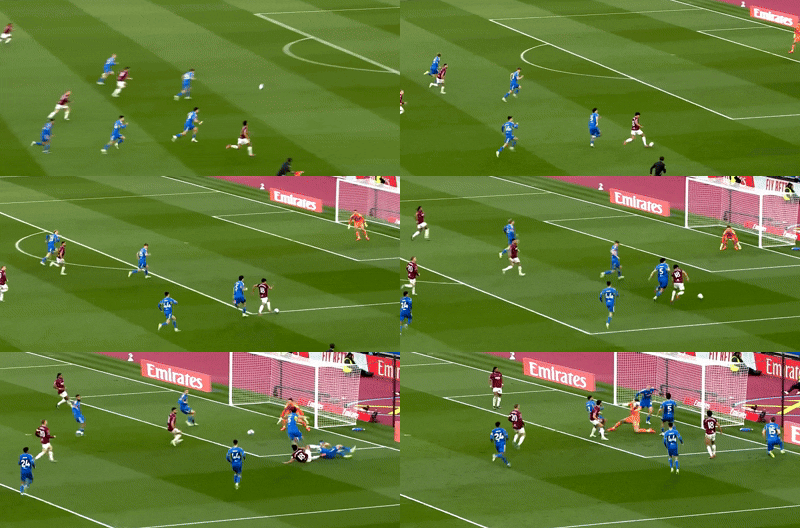
Also, he needs to score more often. While it may not be his primary responsibility, it’s more relaxing to know that your midfielder can score a goal from nowhere, and I don’t think Fernandes gives me that relaxation.
That said, can guided breathing sessions beat their man à la Mateus?
Scalability to the Elite
And while this isn’t a critique of Fernandes’ game, but rather a worry about the situation he finds himself in, I do wonder how Fernandes’ game will translate into a scenario where he isn’t responsible for so much of his side’s ball progression. More specifically, I wonder how he’ll handle not being able to grow into games as quickly as he would for a side that constantly feeds him the ball.
Granted, this worry is mitigated by the fact that, as someone who’s had to defend so much over the years, he has the ability to switch on instantly instilled in him. But can he switch on just as quickly when he hasn’t received the ball for a few minutes while play has evolved and progressed around him?
I’ll say yes, and while this isn’t a deterrent of any kind, given it is, once again, a product of his surroundings as opposed to a problem of his ability, it’s something to note, especially as you integrate Fernandes into your starting lineup.
Before I go on to the profiling and conclusion section of this piece, here’s every single thing Mateus Fernandes did vs. Manchester United, so you can draw your own conclusions based on what you’ve seen before seeing mine:
P.S. Yes, I’ve made a new YouTube channel. Subscribe for more player comps and other tactical analysis.
Profiling and Conclusion
I think Mateus Fernandes is an 8. He needs to move around the pitch to get a feel for the game, and I think you’d lose out on some of his best qualities if you told him to remain static and not roam.
That said, if you consider the fact that his long balls are extraordinarily good, I think you can get away with playing him as the 6 in a double pivot, given he’s sitting next to someone who’s equally capable of sitting when the time comes.
Ideally, you’d like him receiving here:
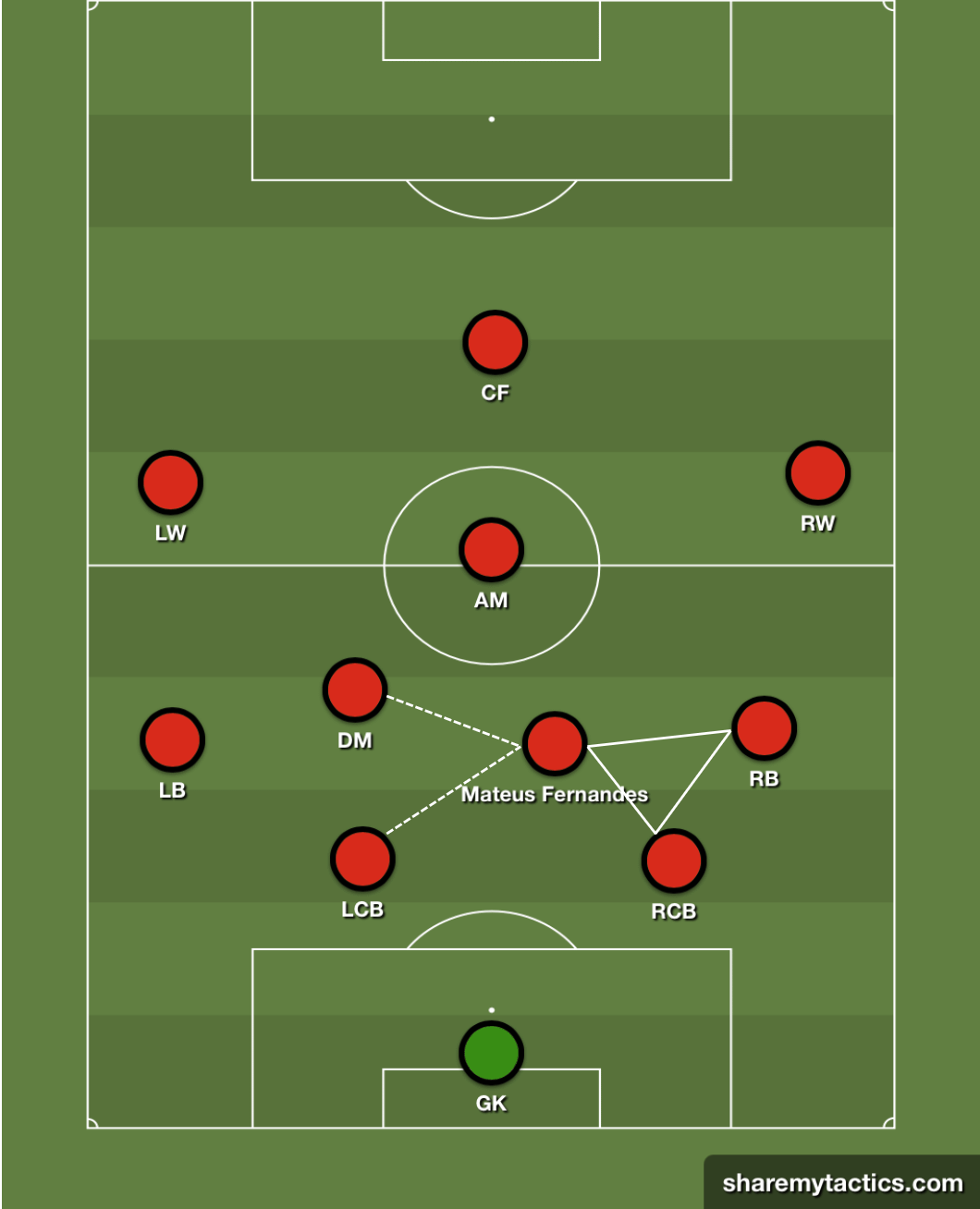
And ending up here:
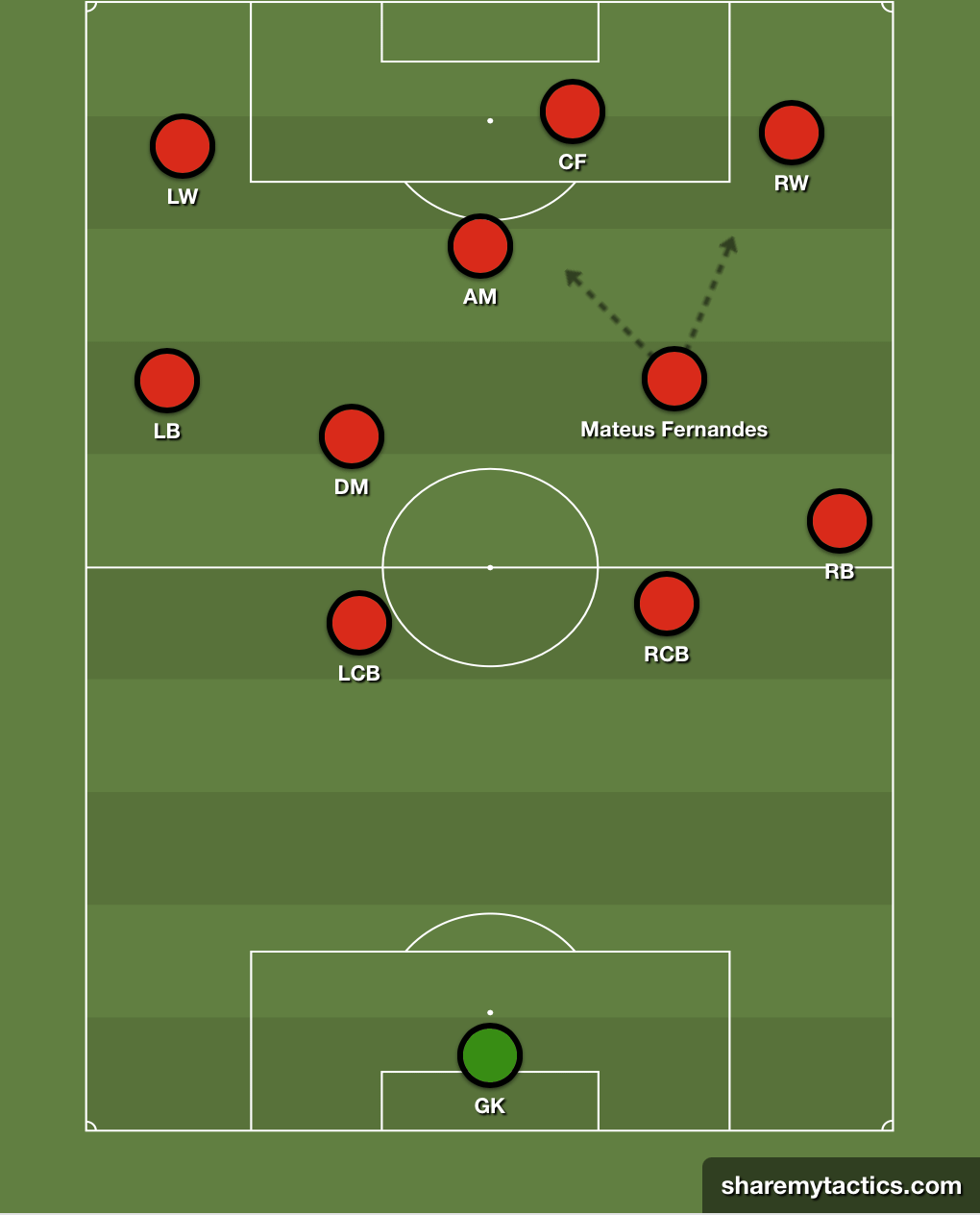
But that’s all on paper. Either way, regardless of system, I think Mateus Fernandes is a good player and will instantly improve any side, particularly by way of deep progression and pressure escapism (?).
I suppose any physical concerns should be alleviated by playing with high-quality players who are equally/more comfortable keeping the ball themselves, therefore alleviating some pressure off of Fernandes. But still, you’d like for him to be next to someone who’s slightly higher on the physicality spectrum. A fast/proactively aggressive CB could also help counteract some of his roaming needs, so add that to the shopping list.
TLDR for my whole spiel: Fernandes is a good player. He’ll do well in any circumstance. He’ll thrive in certain ones. But the he’ll-do-well-in-any-circumstance part means Fernandes would be a low-risk purchase for any top side wanting to raise their floor.
Aaaaand that’s that. Thank you so much for reading. I really do appreciate you sticking around this long.
If you enjoyed reading this piece, please consider subscribing (it’s free):
Or sharing this piece with a friend and/or sporting director:
But most importantly, take care, stay safe, and have a brilliant week ahead!
Here are a few samples of my work:


Great piece, enjoyed it reading it. I like mateus Looong game: quicker passes in the air that travel to its destination quickly. Its a small thing but it leads to a massive difference when comparing players. Something which i noticed Stiller at Stugartt does, lobs travel slowly in the air -- Leading to them being cut out. Looking forward to where matty goes, hopefully its Old Trafford.