

📚 Contents
Note for email readers: This email is truncated. To read the full article, please click on this link or the link to the right of [Message clipped] note at the bottom of this email.
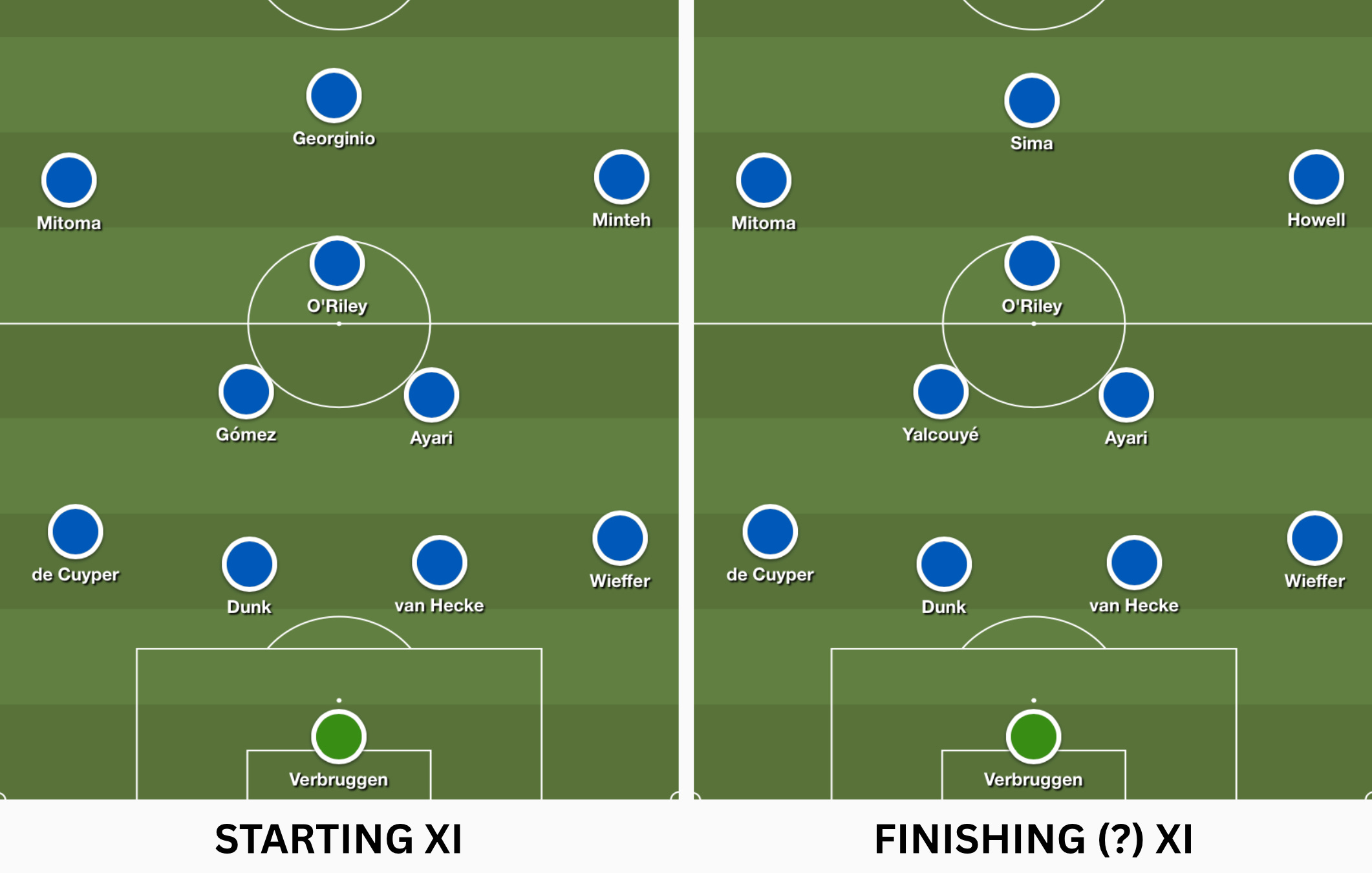
Lineups:
Structures in possession
For a section called “Structures in possession,” we sure didn’t see any actual structures in possession. If I had to quantify a base structure, it’d be this:
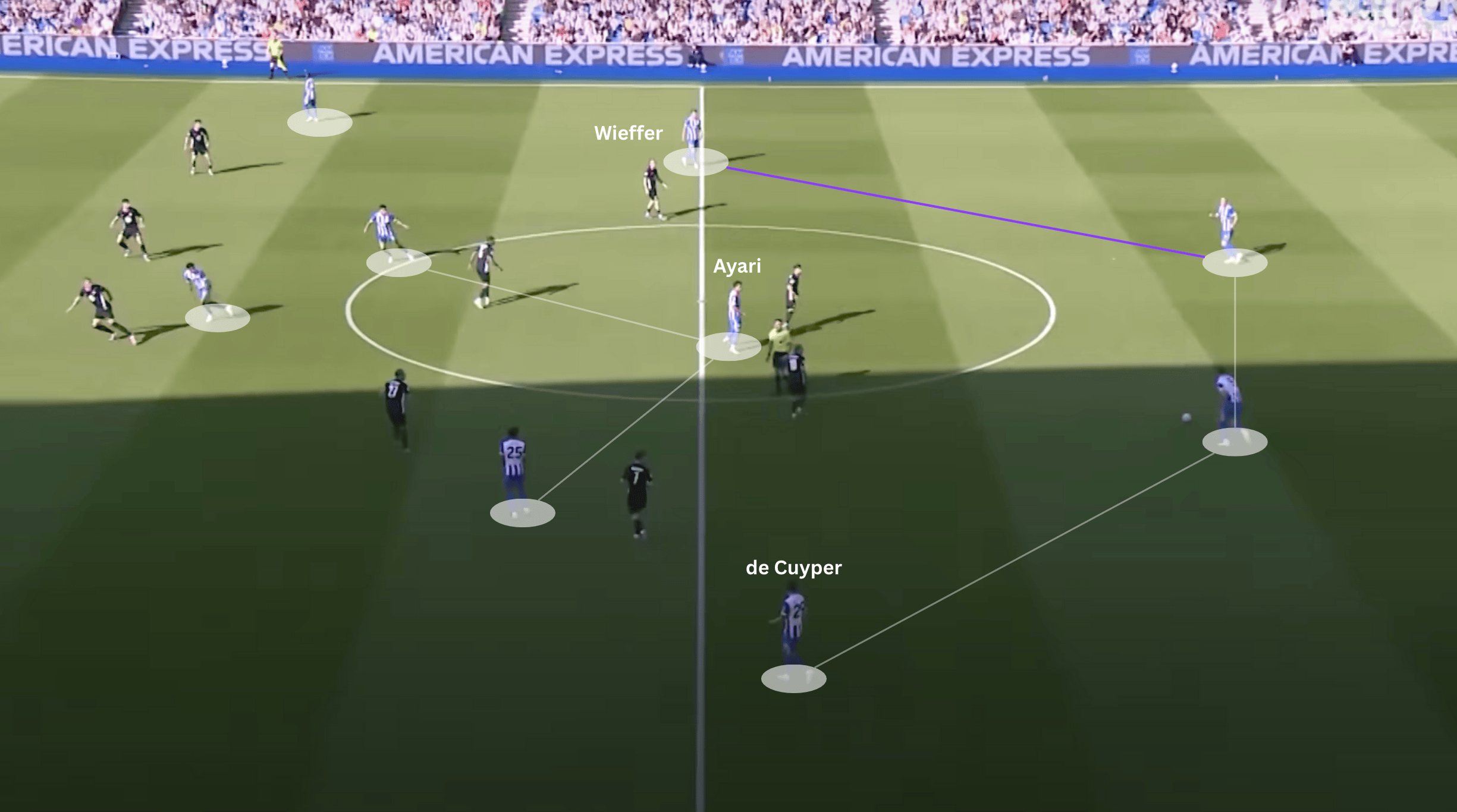
4-3-3 with low and wide fullbacks; Ayari sitting deep with Gómez roaming (leaving empty space in front of van Hecke); Georginio dropping deep into what you’d expect a CF’s position to be; and O’Riley playing as the 10.
The space in front of van Hecke isn’t ideal when Brighton are caught in transition (especially given Ayari’s lack of physicality), but giving him room to drive into makes sense for a) his progression, b) his oddly high rate of switch completion (meaning he can get the ball out of dangerous areas) and c) the fact that van Hecke pushing up is what led to both of Brighton’s goals.
Speaking of Ayari, he has a LOT of build-up pressure here and that’s… fine? He can cope with the in-possession stuff and understands space well enough not to get caught out of position regularly. He gets a lot of stick for his defensive work, but realistically a Gómez–Ayari pivot isn’t built for defending. Frankly, it shouldn’t be built anyway, but I digress. Getting Baleba into this XI should help cover up Ayari’s weakness pretty effectively, given how well Baleba covers ground and duels.
(Fluidity) jumpscare alert 👻
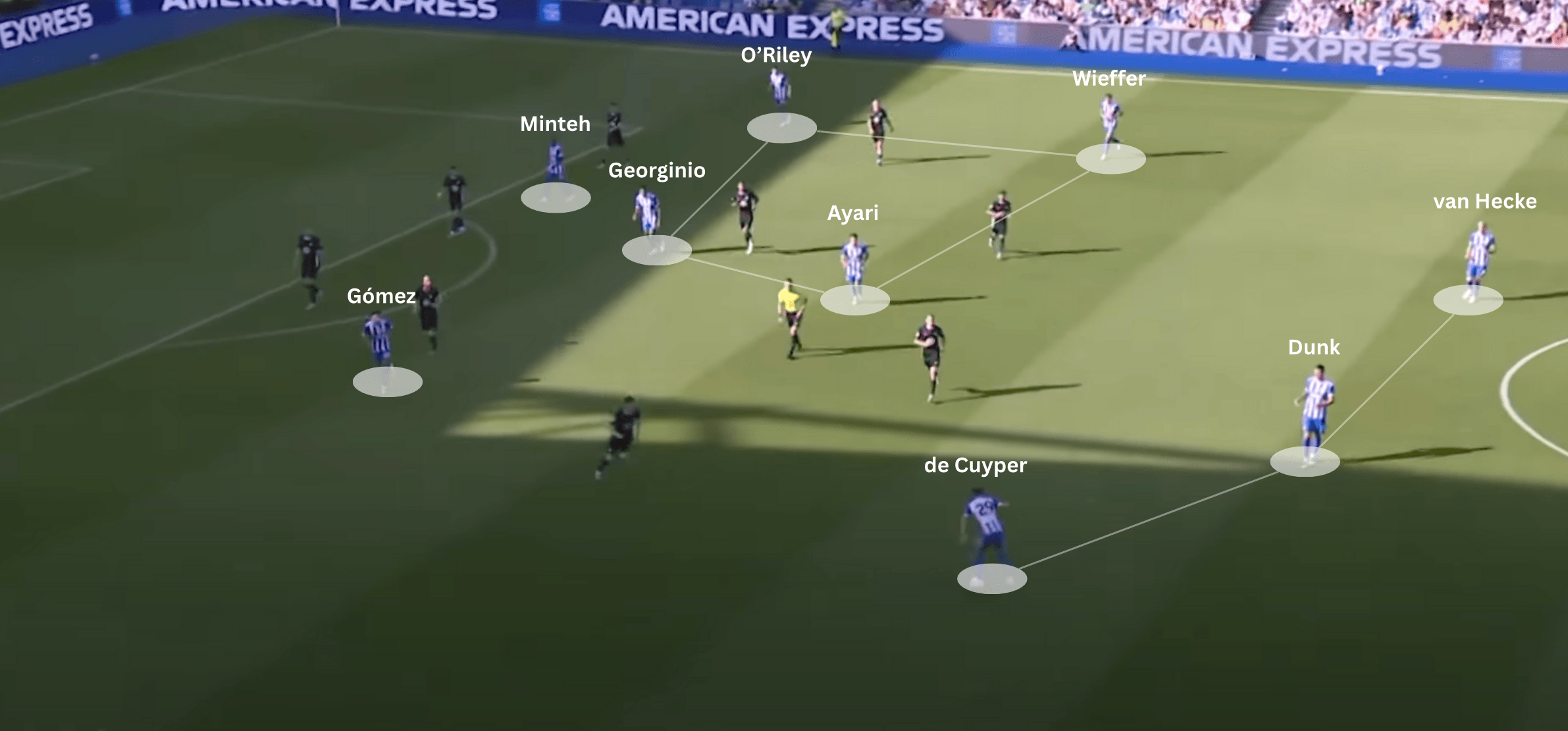
I’ve spoken about why building up in a back three suits Brighton here, but Brighton’s positional fluidity + rotation went up a level versus Wolfsburg.
It boils down to see space → occupy space, yes, but I think Hürzeler’s done well (in possession) to minimise spaces between players → preferred zones. Dunk as CCB mitigates his lack of pace, van Hecke at WCB suits his front-footed defensive style, Minteh central with O’Riley overlapping him puts him in a good spot to run in behind. Georginio staying a bit deeper gives him the option to a) play a through ball or b) shoot from the edge of the box (both suit his skillsets). Gómez gets to roam the LHS, which he’s pretty good at given his time playing LW and AM, and it just… works. It’s good.
Intuitively you can say this restricts de Cuyper because why in the world are you restricting a wingback like this? But it makes sense. Kinda. de Cuyper gets plenty of touches from deep[er] areas and helps facilitate Brighton’s build-up in the first phase (giving Brighton some extra security without Carlos Baleba there to bail them out). He understands → occupies space extremely well too, meaning he can run up field and combine well with Mitoma (overlapping/underlapping based on Mitoma’s movement). Wieffer playing RB means the RB isn’t ever the most advanced player on the pitch, so he can retreat if needed, giving de Cuyper room to drive forward and hold the width.
The dynamism of the fullbacks leads to:
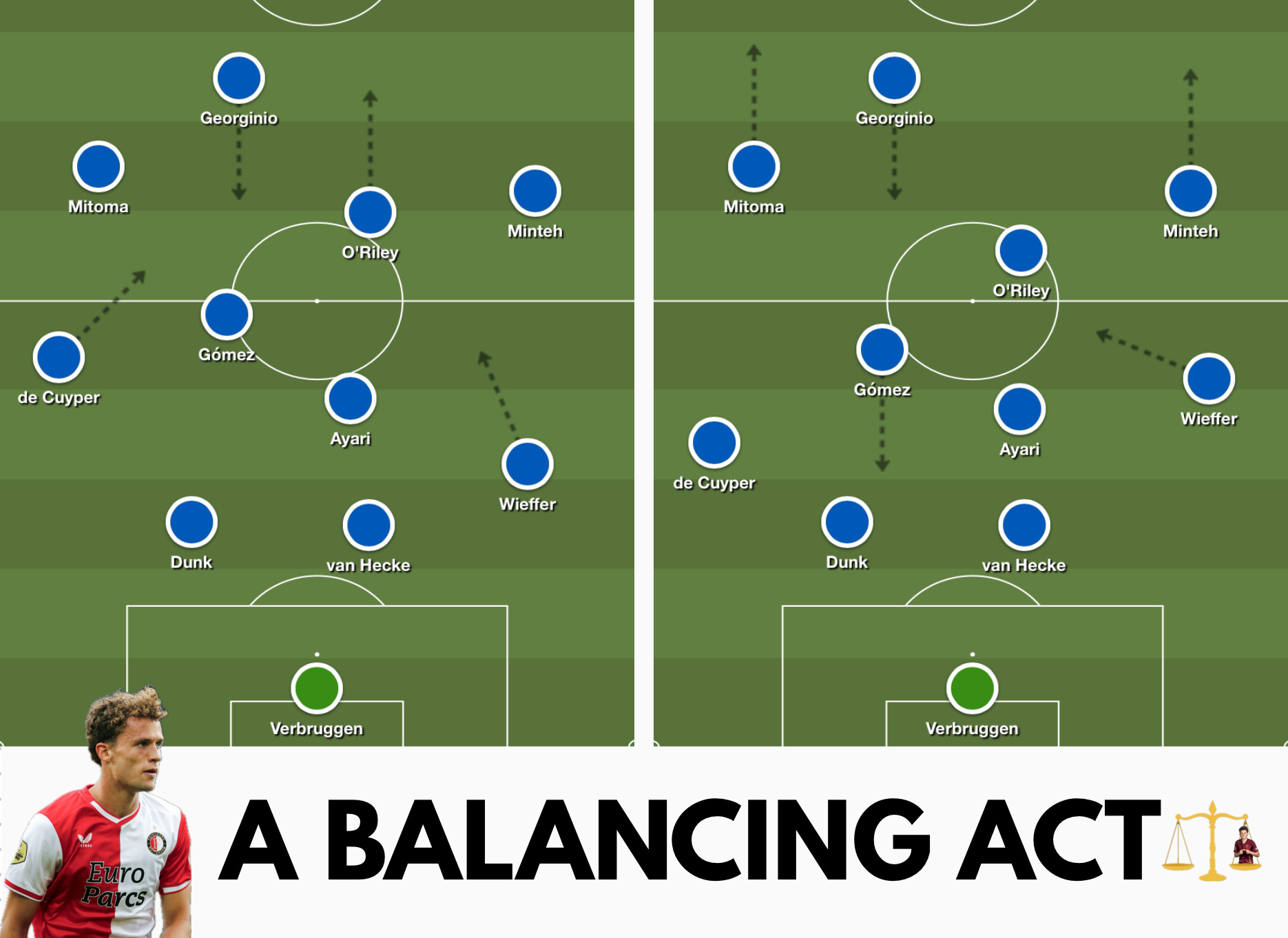
If you water things down, this pre-season has been all about symmetry and asymmetry for Brighton. The LB drops into the back three one game, and rotations ensue from there; the RB drops into the back three the next game. Rinse. Repeat.
Just as Minteh frequently found himself central with O’Riley overlapping in midfield, so did Mitoma with Gómez.
OOPs I still can’t defend
I clearly remember thinking, “Neutrals would LOVE watching Brighton attack and constantly cringe at their defending.”
And I think when you leave this much space open defending a corner YOU just took, it’s probably best to ask some questions:
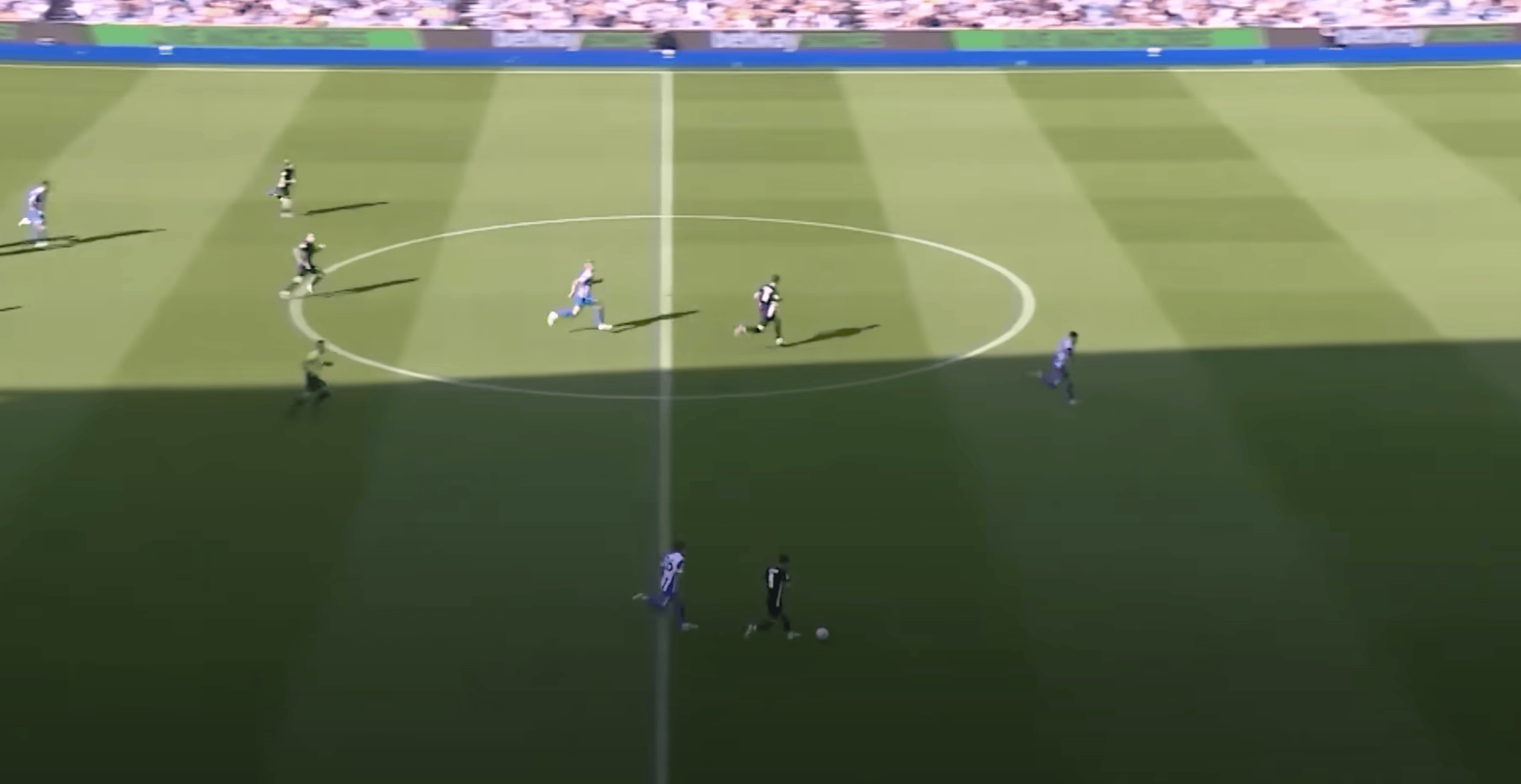
Ayari plays a loose pass
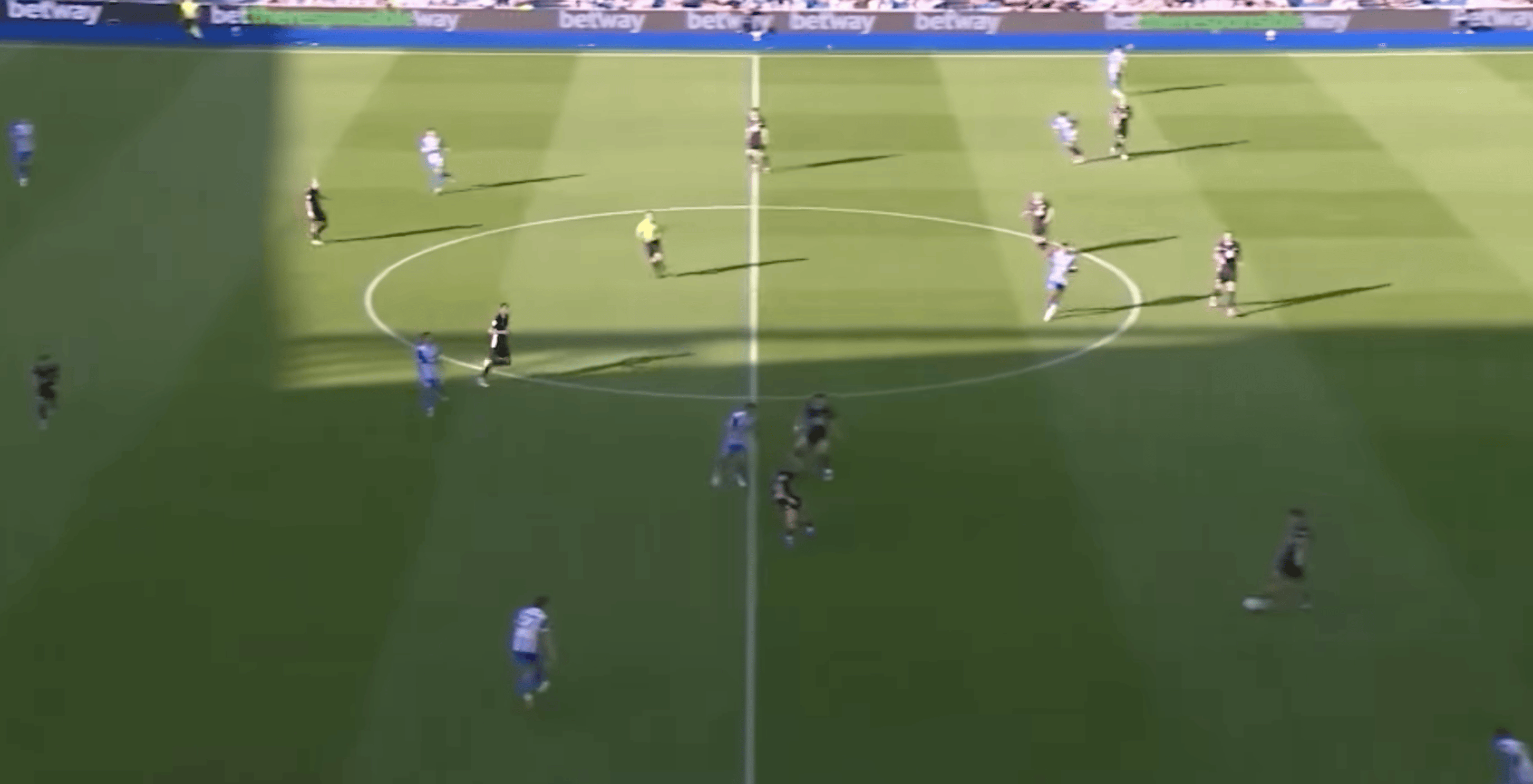
And presses up. Wieffer comes narrow, leaving van Hecke to defend a winger, which opens up central spaces and BAM there’s a void between Dunk and where Ayari was.
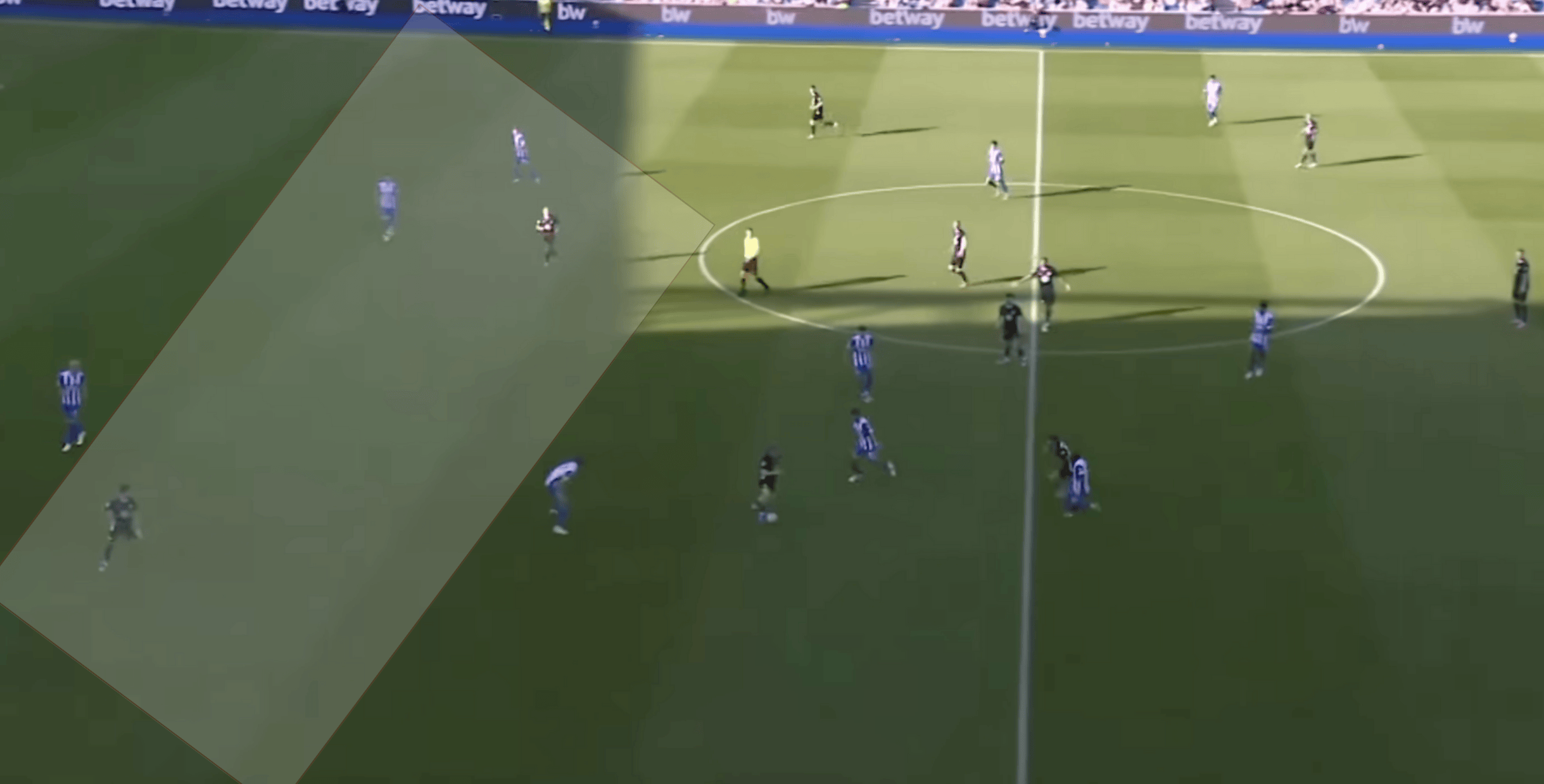
The lack of [deep] central pressure/bodies was a common theme across the match:
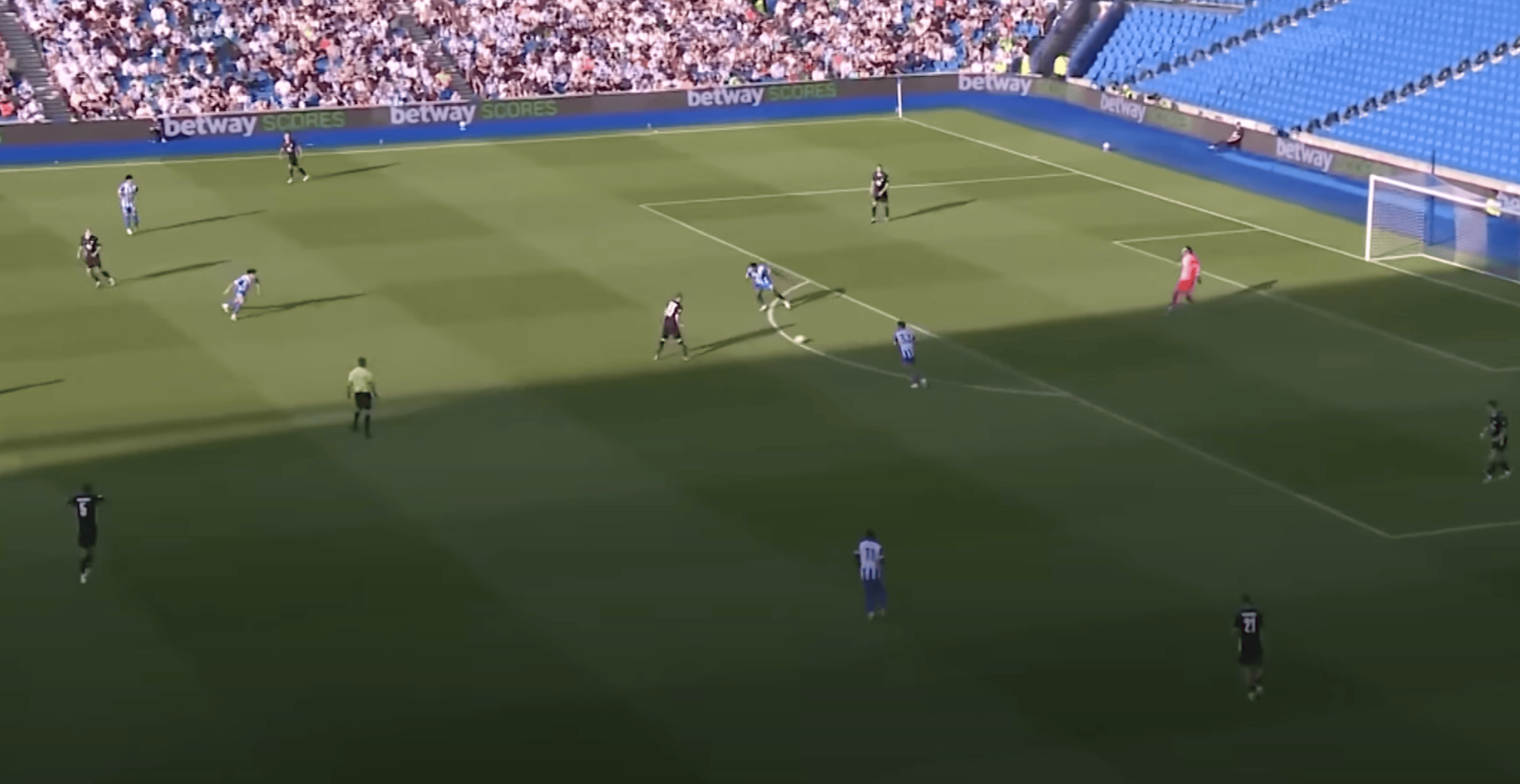
Georginio and O’Riley pressed their socks off this game but seemed caught in two minds here. The wingers hold their width, but straying from Brighton’s usual 4-4-2 is Diego Gómez, who sits alongside the wingers. It makes more sense to do this from the right, given van Hecke’s tendency to jump his defensive line (Dunk lacks the athleticism to do so), and there’s a gaping hole in midfield.
Dunk sees this space and presses into midfield. Smart, but he lacks the speed to get back:
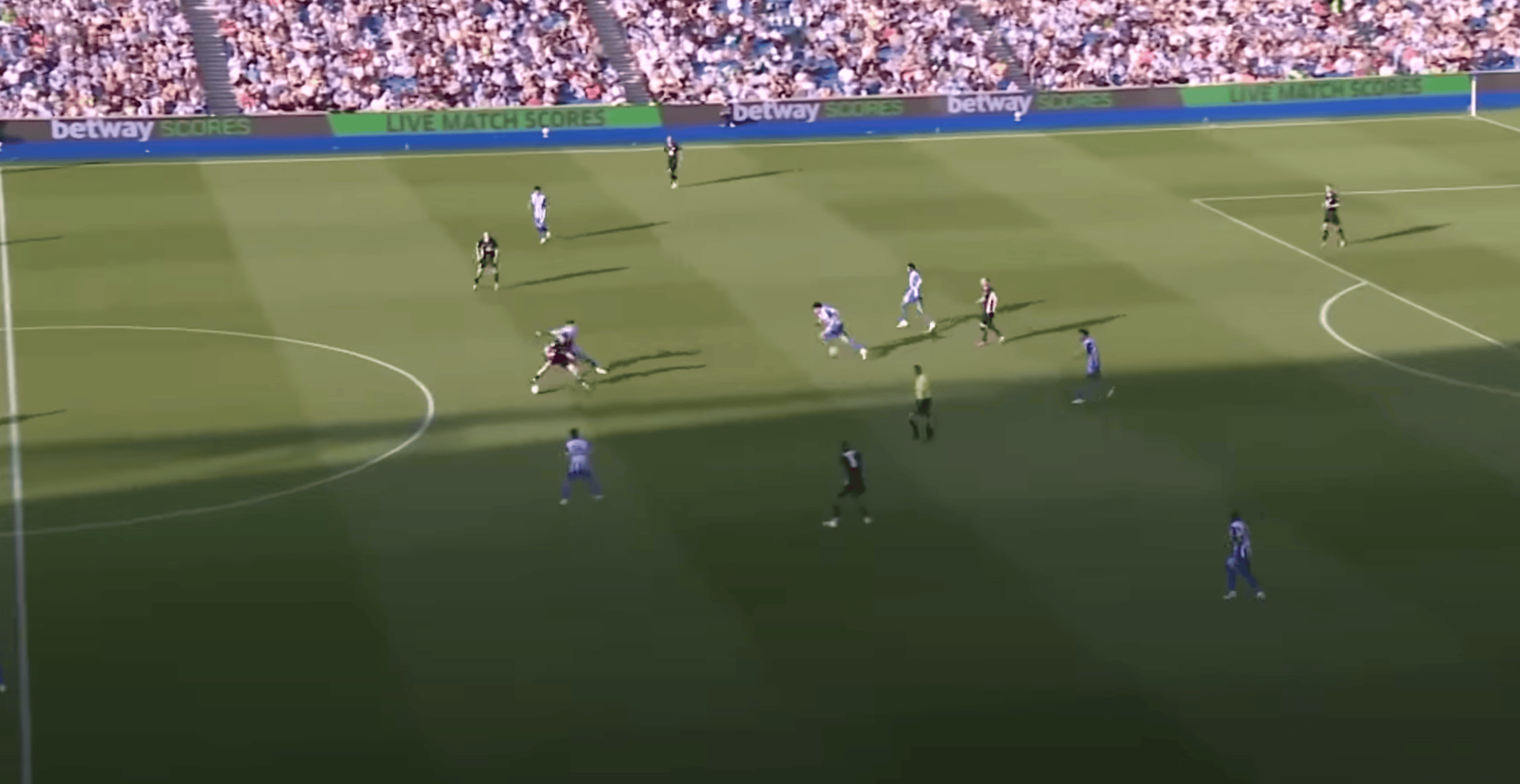
Wolfsburg have space to run into with only three Brighton defenders between them and the net. That sounds like a lot, but one defender is an attacking fullback, another is a confused midfielder, and the last would much prefer to win the ball back high.
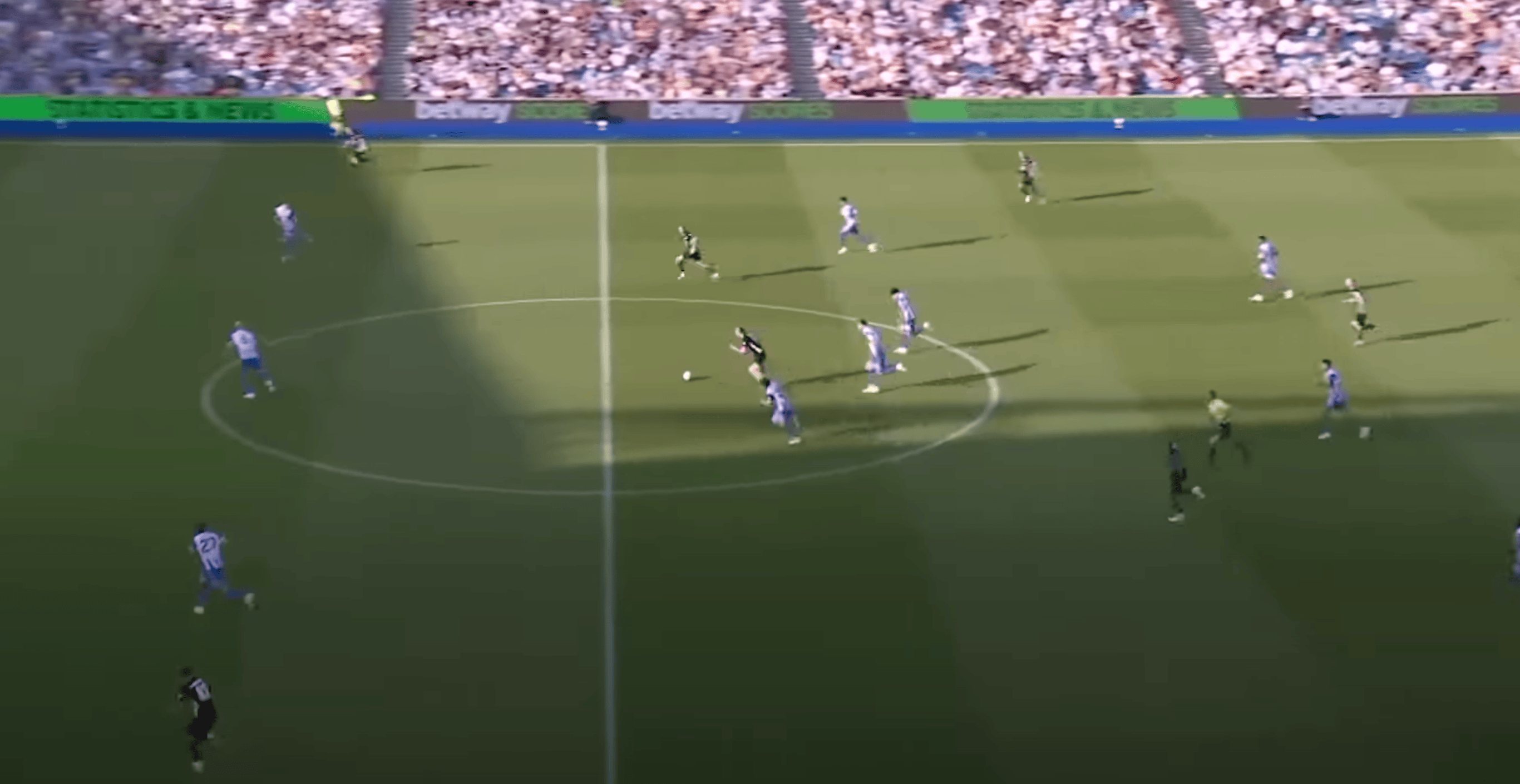
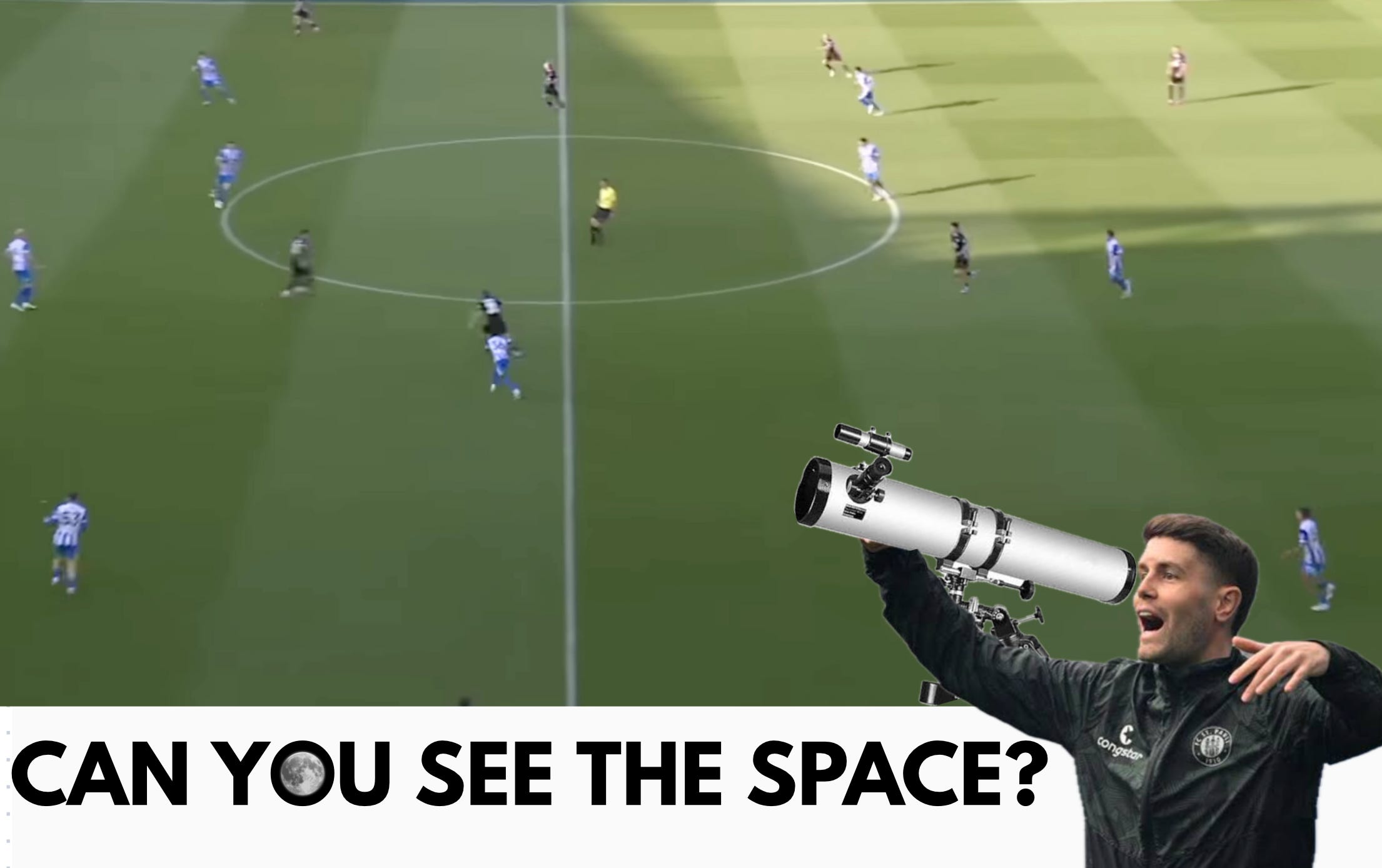
You don’t need a telescope to see just how much space Brighton afford Wolfsburg here:
Where Brighton have gotten better, though, is that at times their midblock looked pretty solid? It was compact, and you could actually make out a discernible midfield, so that’s good. The issue here was that there just wasn’t enough pressure on the ball for the compactness to amount to anything.
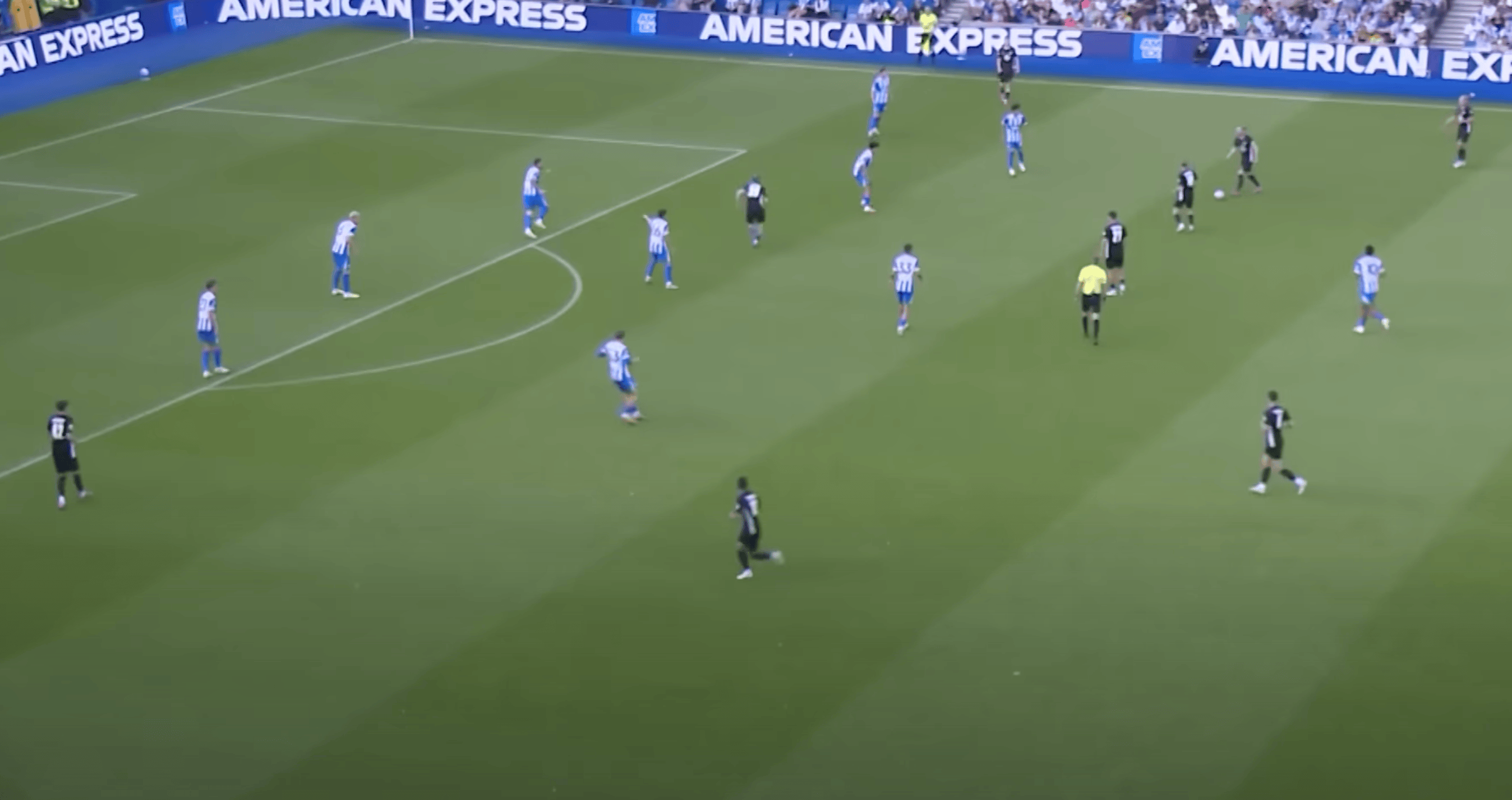
There’s regrouping and counter-pressing, but ultimately you need both. So far, Brighton have been overcommitting to one.
Player X presses the man/ball, Player Y defends his zone because he doesn’t know exactly what to do, and Fans A, B, C, and D cry as their team concedes another shot on goal.
This general lack of 100% clarity about what to do also makes tackles like this that bit more risky:
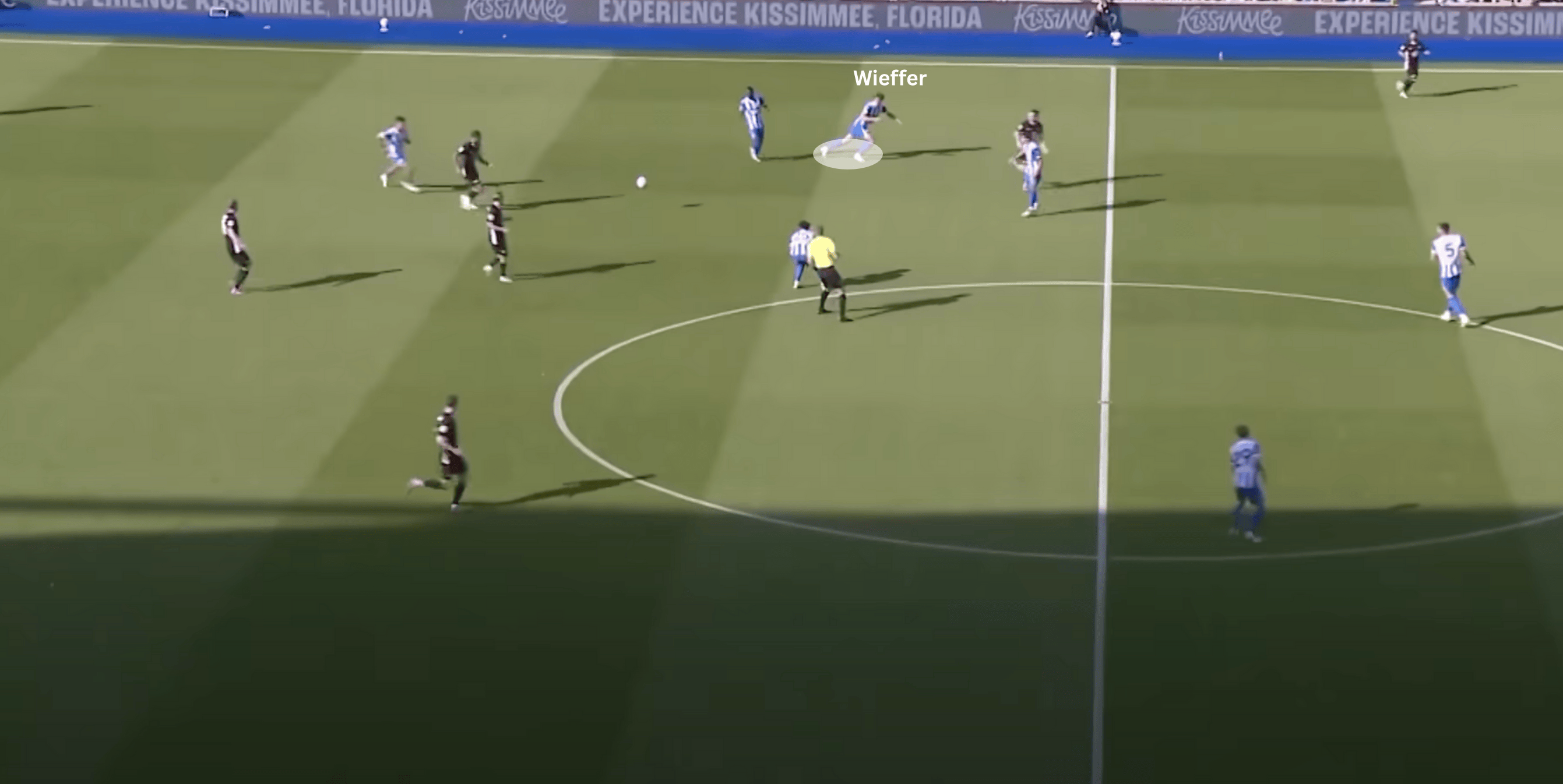
A lot of Brighton’s squad are happy to get down, lunge into you, and nick the ball away. Considering a decent chunk of this match’s defence (van Hecke and Wieffer) are reactive rather than proactive defenders, it’s to be expected.
But doing so when your other reactive CB is two feet away and miles from goal, while the other is essentially at the halfway line with no midfield cover, is certainly playing with fire (and my heart rate). It helps that Minteh and Georginio are willing to press, but I still see it as a major structural issue.
I think aside from some training ground work, there are two simple fixes to a lot of problems here.
Carlos Baleba. He’s like Bob the Builder. He can fix anything.
This might be jumping the gun a bit, but I think Diego Coppola is already Brighton’s second-best defender. So, if van Hecke does lunge forward, you have Coppola to sweep, and he’s a pretty strong tackler at that—so you’re a bit at ease mentally.
The undertone here is just athleticism, really.
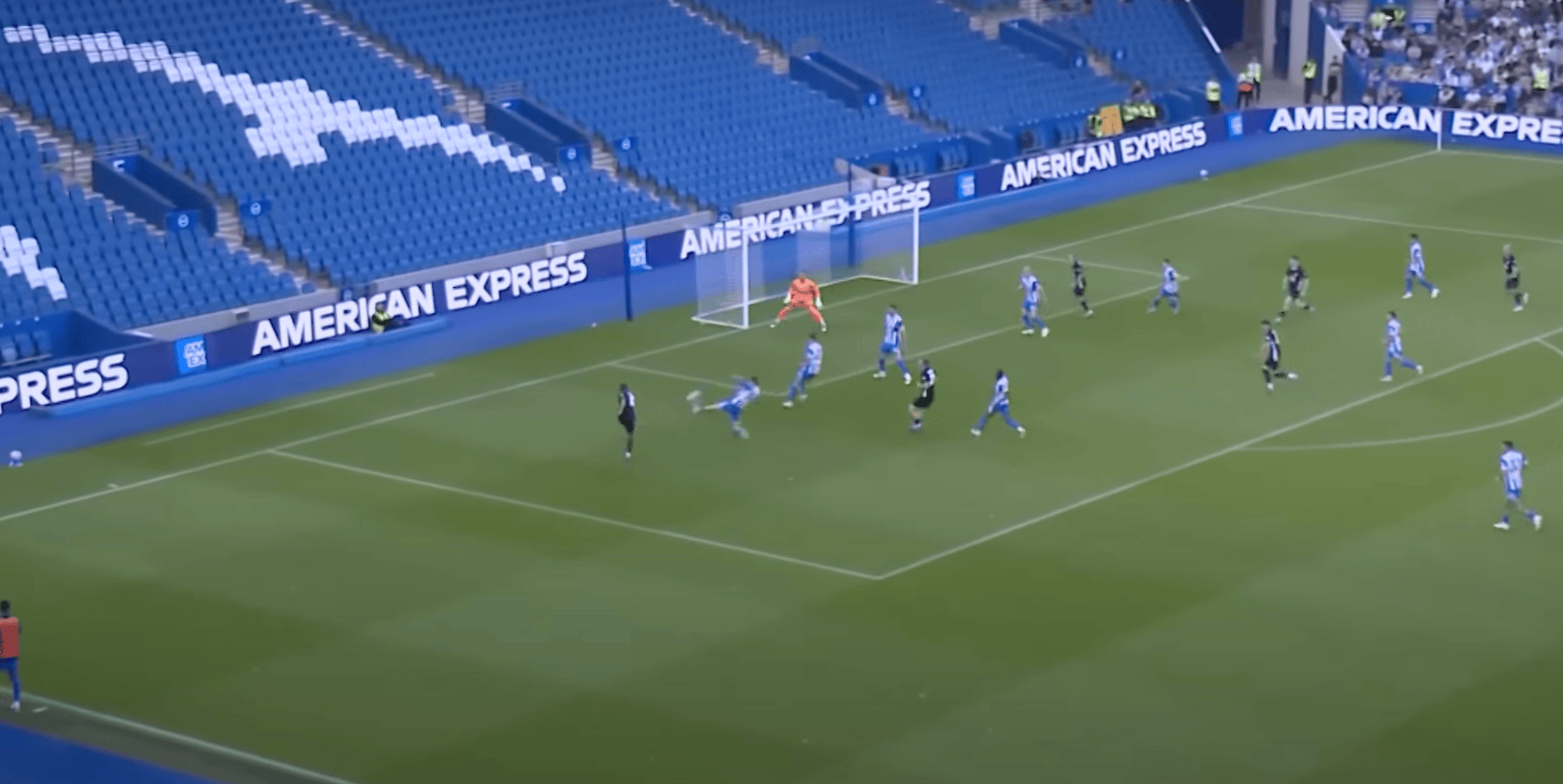
Lastly, I think Harry Howell’s positioning here is really, really suspect (perhaps caused by indecision) but he does well to change directions anyhow (albeit a bit too late).
Does well to locate and rotate around his man
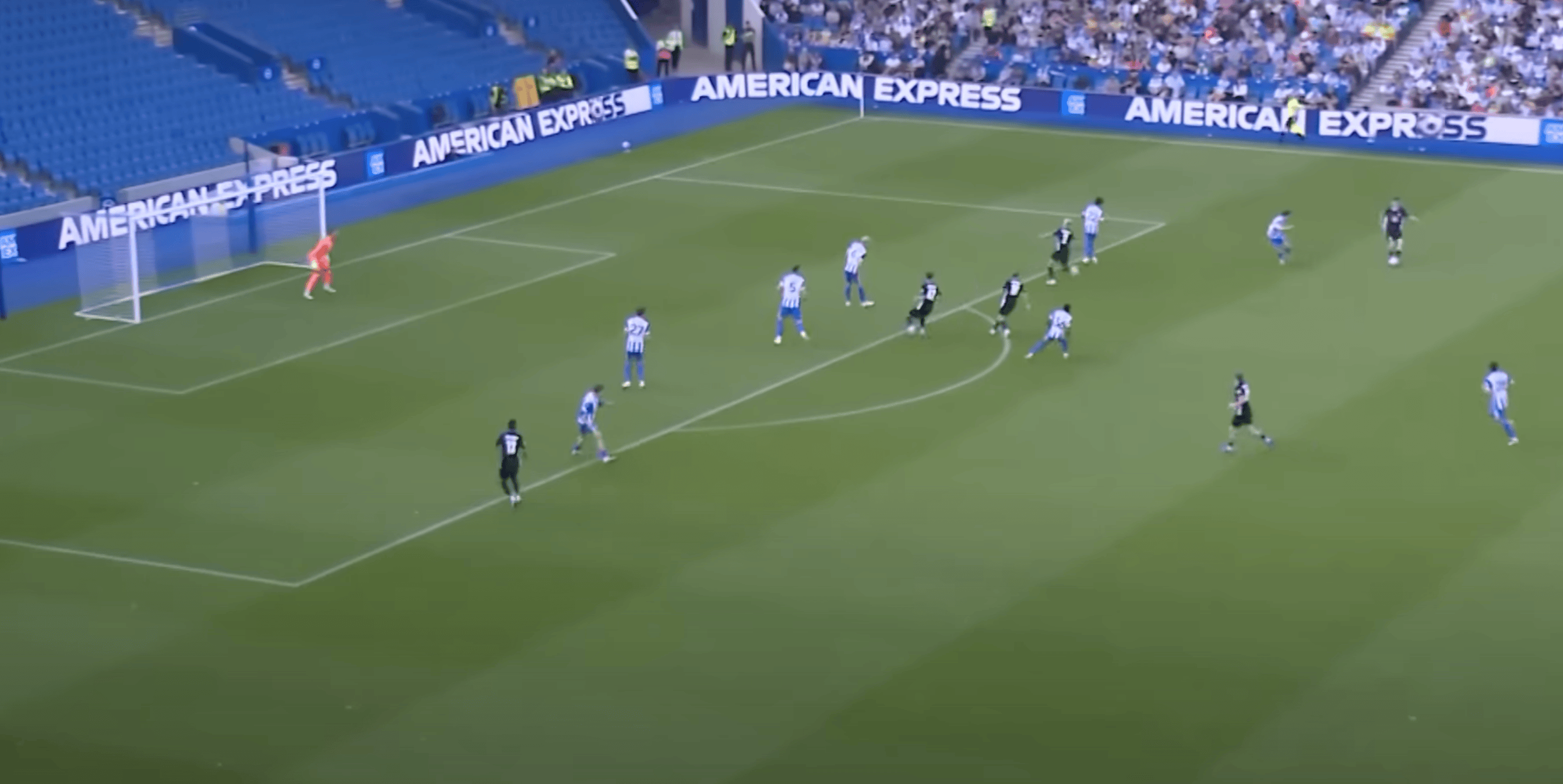
His marker creates separation but Howell’s still in a good spot to change direction
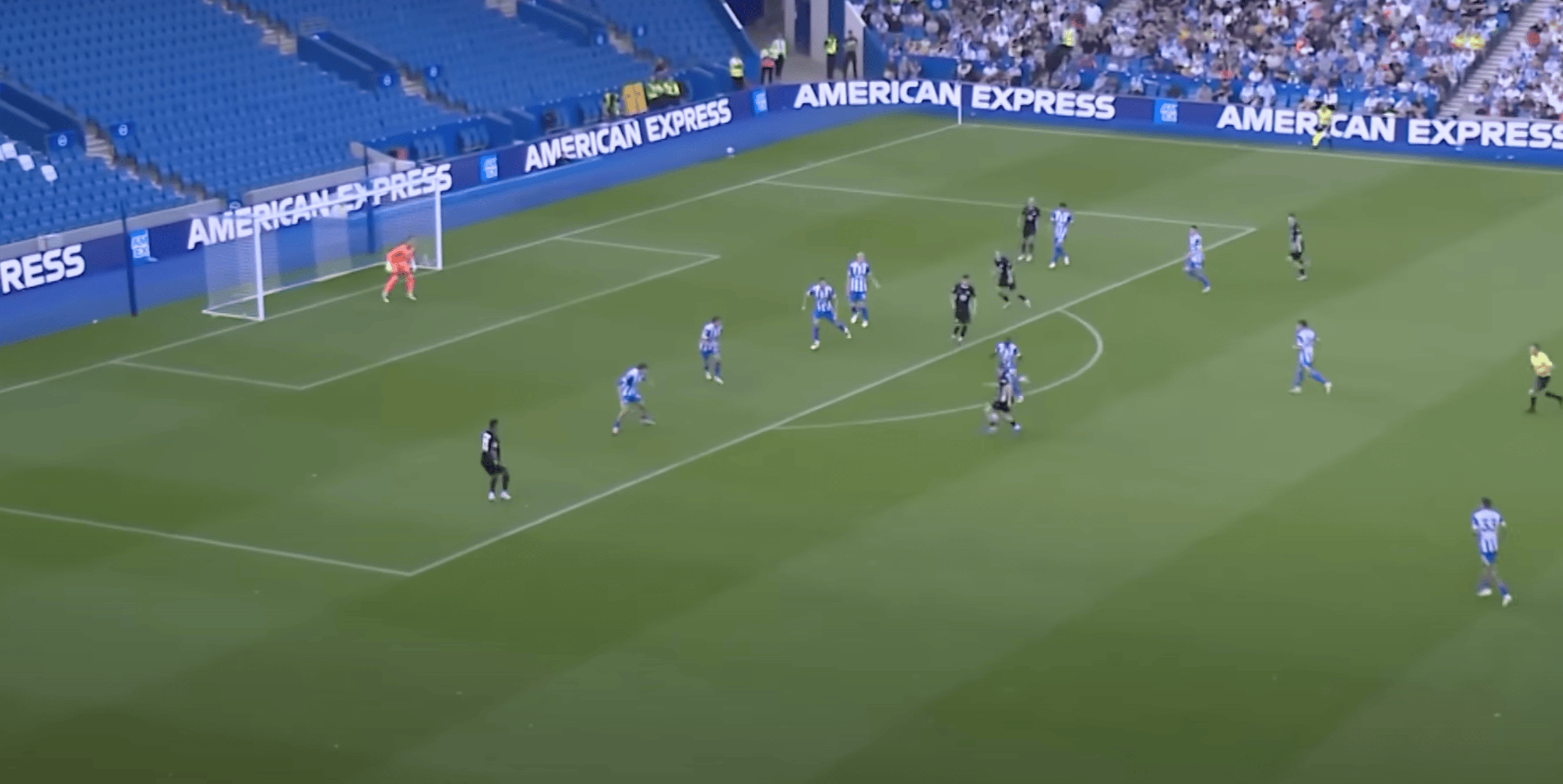
Lunges in and misses the ball. Notices the overcommitment and tries to rush back to his marker
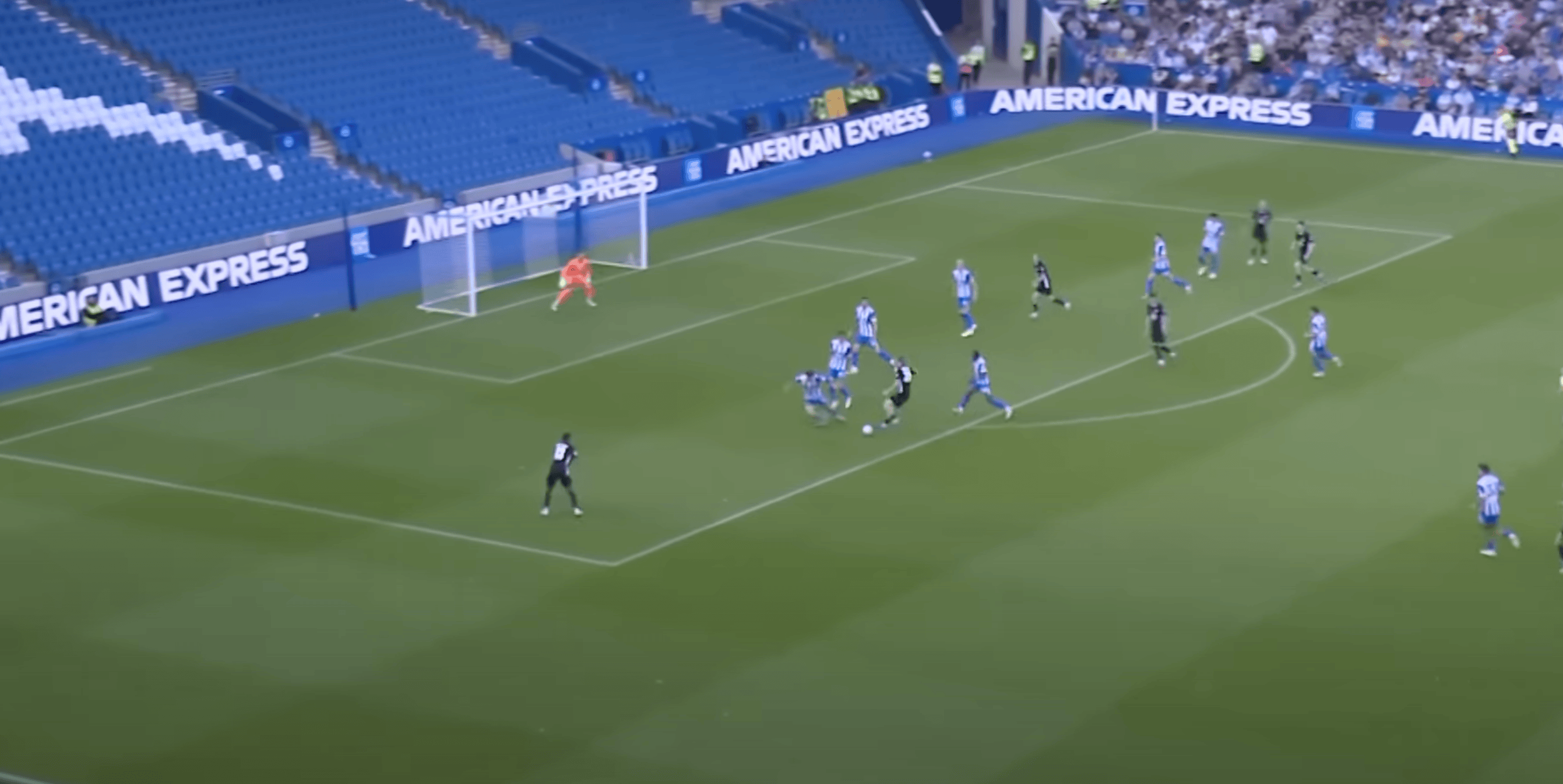
Does well to cover ground, and it’s smart to get his boot high to block the ball, but it’s slightly late
Bart Verbruggen and anticipation
I’ve noticed that Verbruggen’s first instinct is often to push the ball away with both hands close together. It works if the shot’s coming straight at him, but it
1. increases the chance of a rebound
2. limits flexibility → late changes in direction
3. could unnecessarily strain the wrist?
Either way, he had a spectacular game barring the goal Brighton conceded (thank you, Captain Obvious). I don’t necessarily think Verbruggen’s anticipation is up there yet—perhaps it’s rustiness from time out with injury—but his reflexes are excellent. You ultimately need both, with perhaps anticipation to a greater degree, but I have no worries about Verbruggen scaling up in this regard.
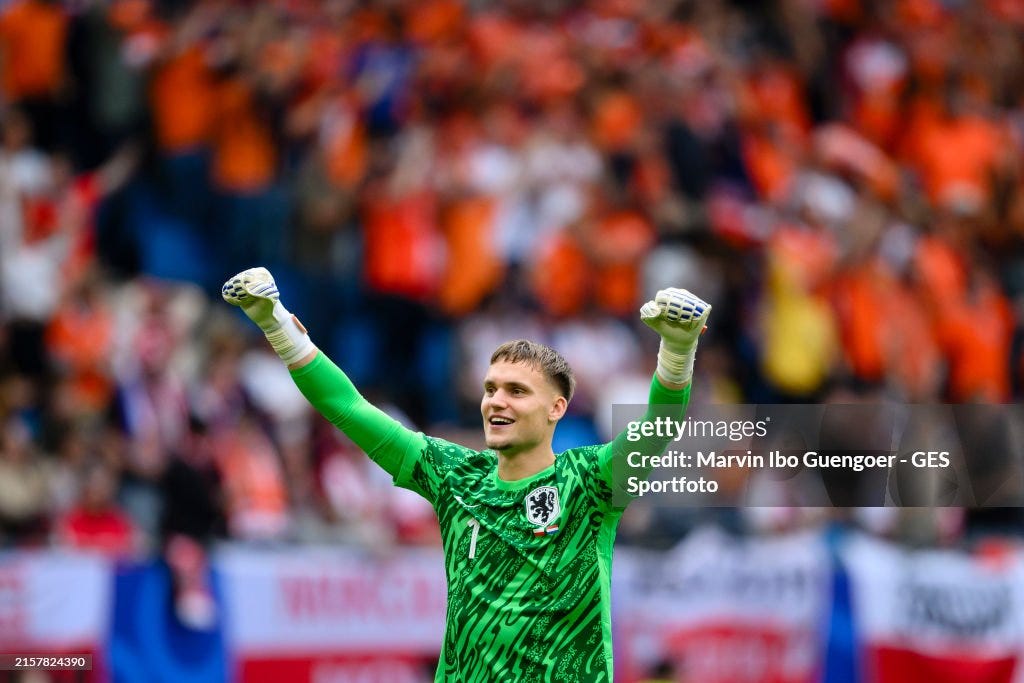
Georginio Rutter and the importance of socks
Yeah, I have a whole sock theory going on, but more on that in a short while. Anyway, without wanting to sound jealous, I think Georginio Rutter could become better than João Pedro, and I rate JP extremely highly.
Firstly, Georginio’s press was ridiculous yesterday. Watching him press Wolfsburg’s goalkeeper suffocated me through my laptop screen. Second, he’s very, very two-footed, which is really useful given how central he finds himself. Third, he understands space brilliantly. He consistently dropped into midfield versus Wolfsburg, but as soon as play switched to the wingers, he came within a foot or two of the CB’s shoulder—slightly too late to run in behind, but in a perfect spot to thread a pass through instead. This also meant he’d find himself at the edge of the box [when shooting], and considering that’s his preferred shooting zone, it just works.
Speaking of shooting, early shot alert 🚨
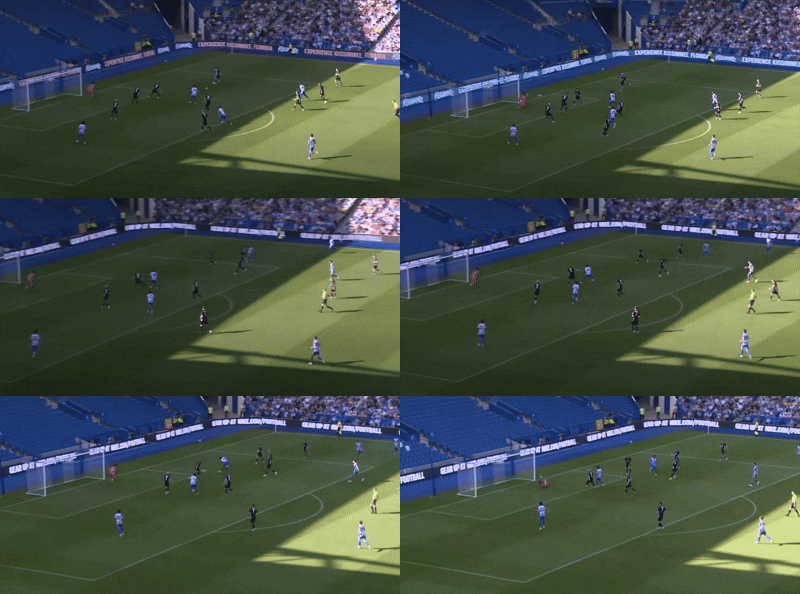
A two footed early shot taker? Yeah, sign me up.
Georginio’s running is also extremely efficient. High cadence, agile, good at accelerating, decelerating, and changing direction. I think he suits running into space because of how well he can cover ground, so he’s best used just like JP was: either as a CF with license to drop deep or as a shadow striker who patrols the edge of the box.
But what I’m really thinking about is whether his low socks make him look more nimble because of their shorter length and the contrast with his longer leg—yeah, okay, this is getting weird. But there’s a theory here, I tell ya.
Kaoru Mitoma
At one point in this game, Kaoru Mitoma ran half the length of the pitch, slide-tackled a defender, and won the ball back.
Not only do I think Mitoma’s pressing has improved by leaps and bounds, but so has his speed of action.
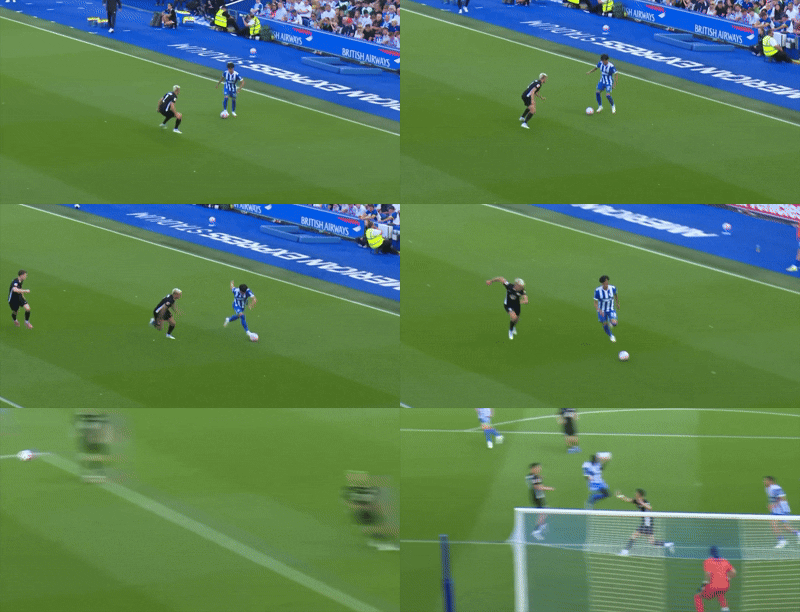
Good burst of pace, and Mitoma does excellently to get under the ball and ping it (abrupt finish to the follow-through) over the top.
His shooting was also quick throughout the game, and I think he’s become far more efficient overall. If he stays fit, he should comfortably hit 15 goal contributions in the league.
Yankuba Minteh and copious amounts of hyperbole
Shields the body well; low centre of gravity
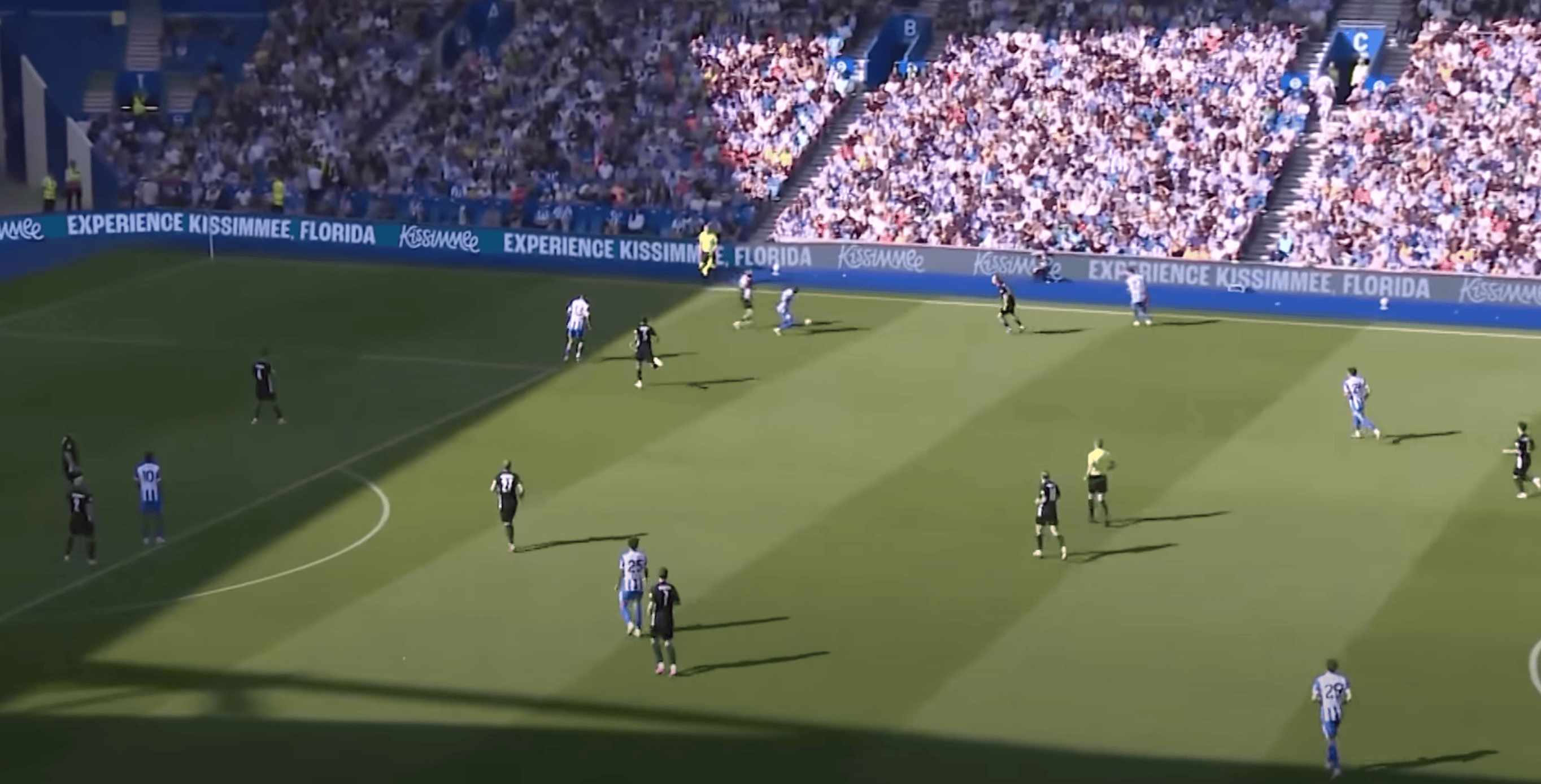
Stiff arm to create distance and creates separation well with one touch
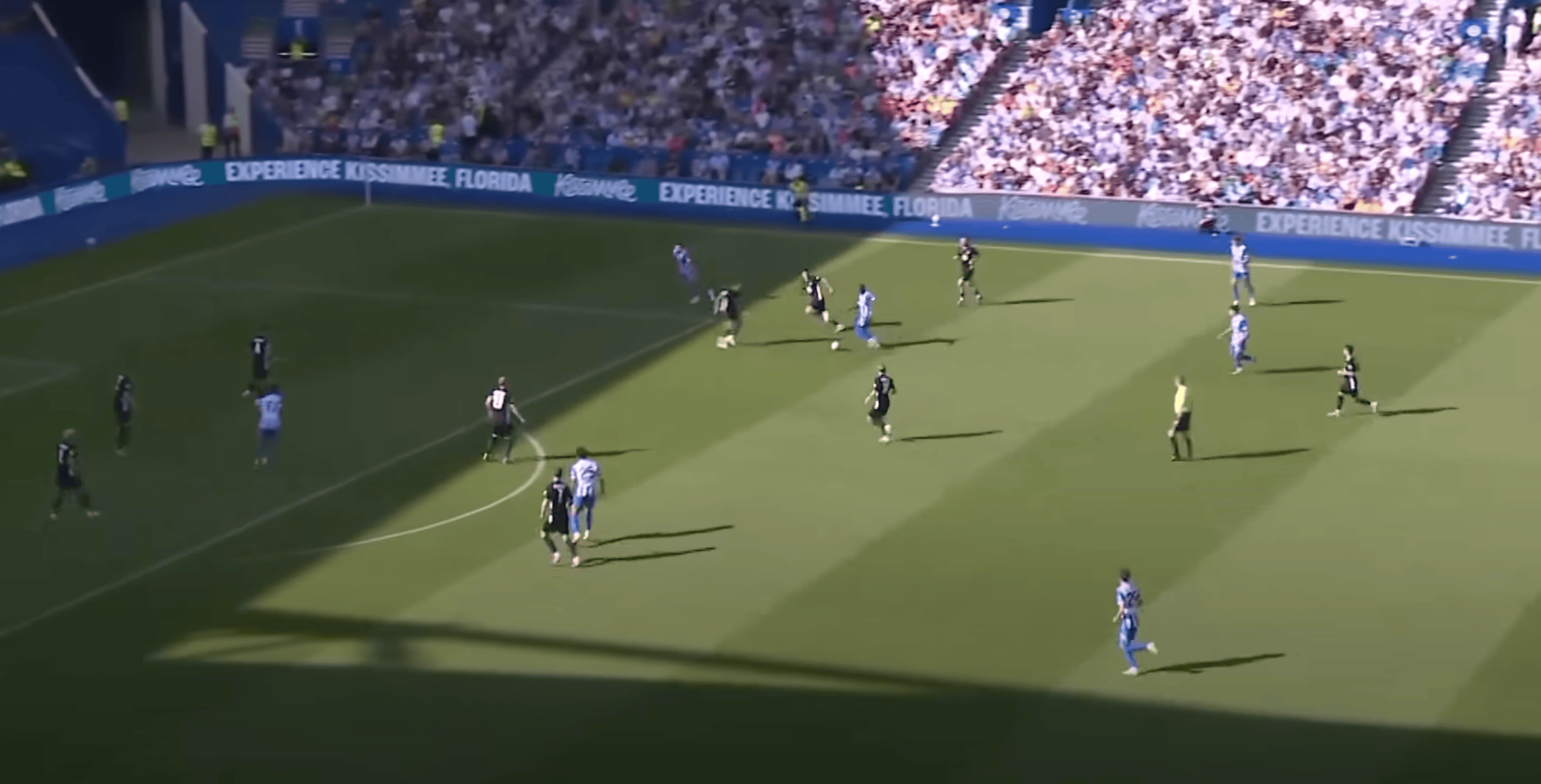
Minimal backlift (less predictable); perfect threaded pass
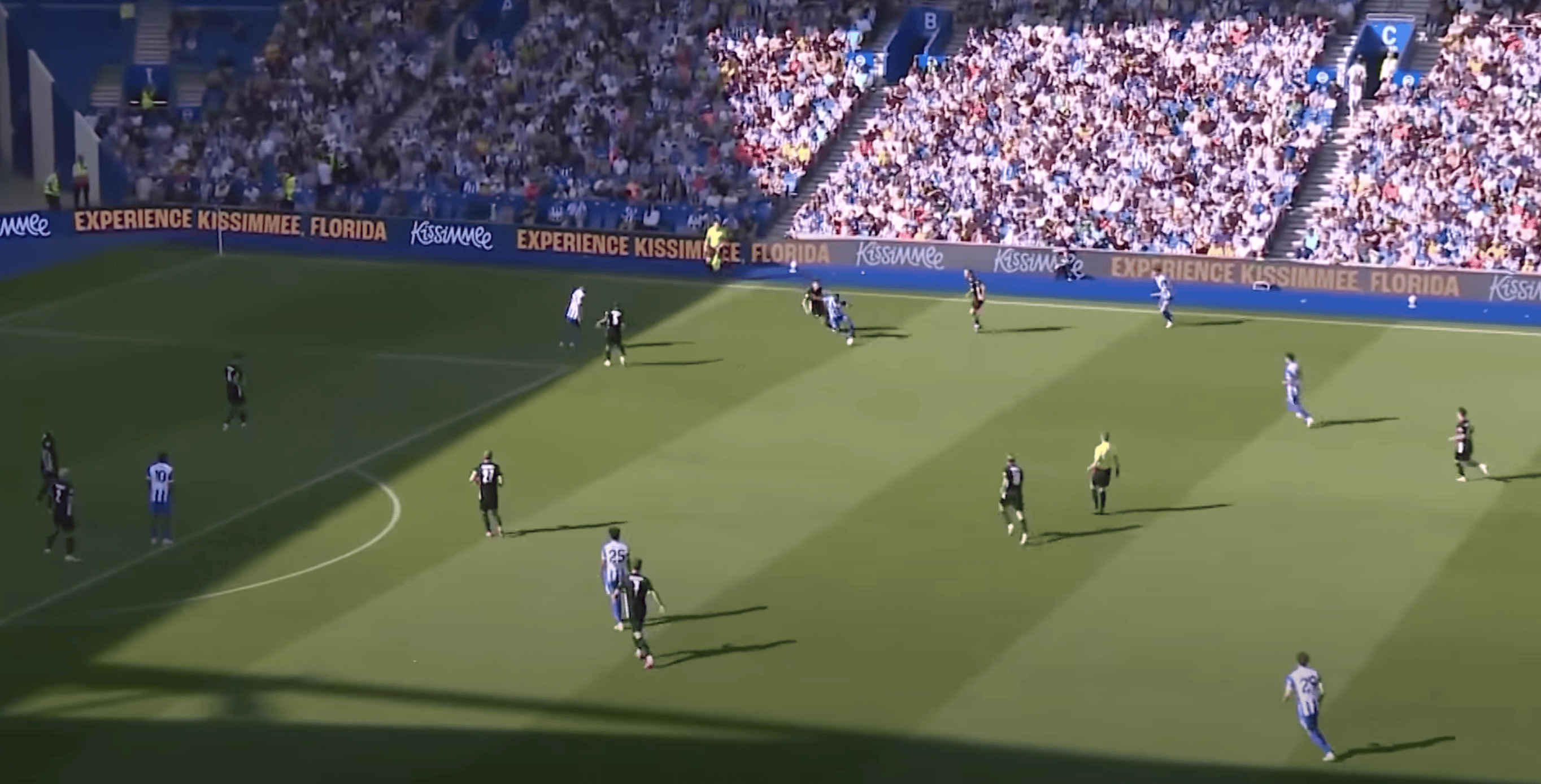
I covered Minteh here, and the good stayed just as good vs. Wolfsburg:
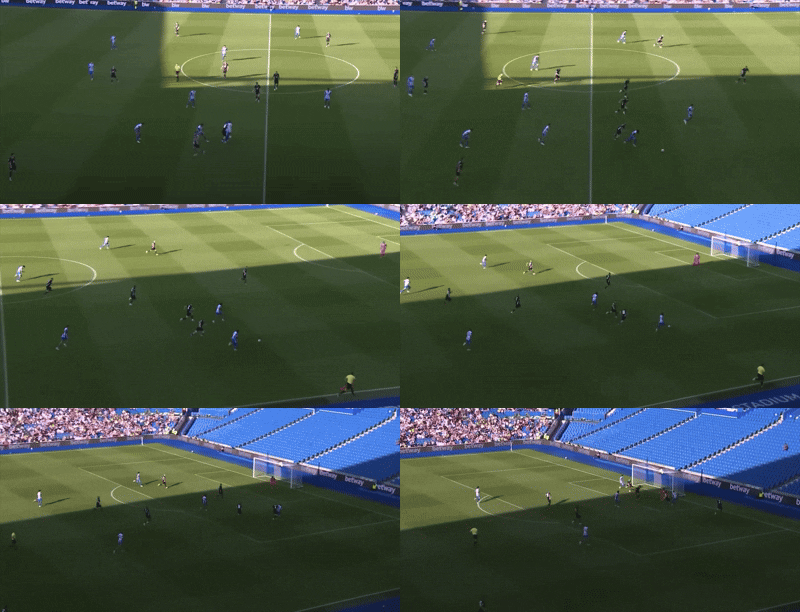
I don’t have much to say beyond that, really, other than I think Minteh will go on to become one of the best wingers in the world. He’ll run circles around your favourite defenders, favourite defenders.
Matt O’Riley and Jan Paul van Hecke
O’Riley’s had a brilliant pre-season. Three facets of his game have impressed me in particular.
His pressing. I think this was a bit of an issue last season (pressing from deeper in midfield) but he’s pressed really, really well as the RF in a 4-4-2. You can’t fault the work rate.
Turning with the ball — he’s able to consistently take the ball in his stride [on the half turn], quickly change direction and accelerate, and get the ball off his foot. Basic, but important as an advanced 10.
Crosses in the box:
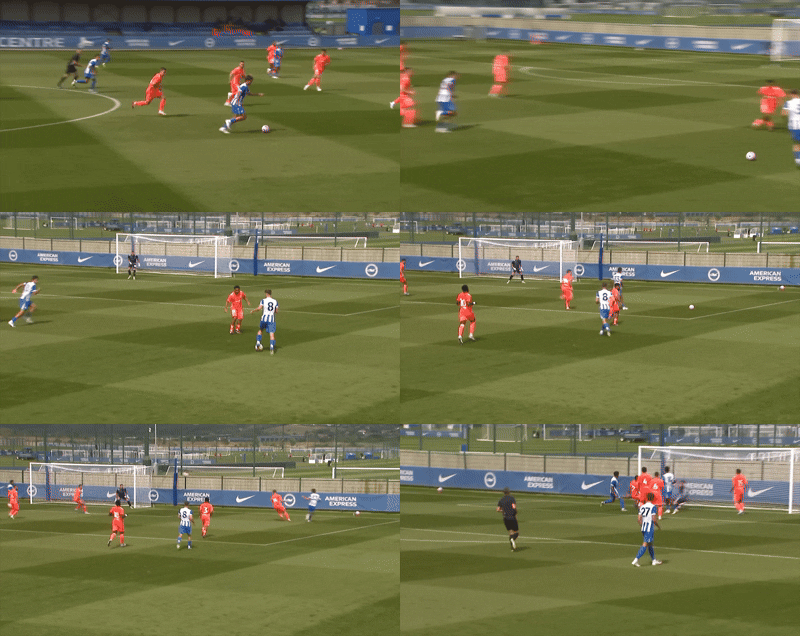
I think this one pattern of play has become commonplace since O’Riley moved into the 10: receive the ball, 1-2, get into the box, first-time cross. It should be pretty useful once Stefanos Tzimas and his tall frame enter the fray.
And this is good from van Hecke:
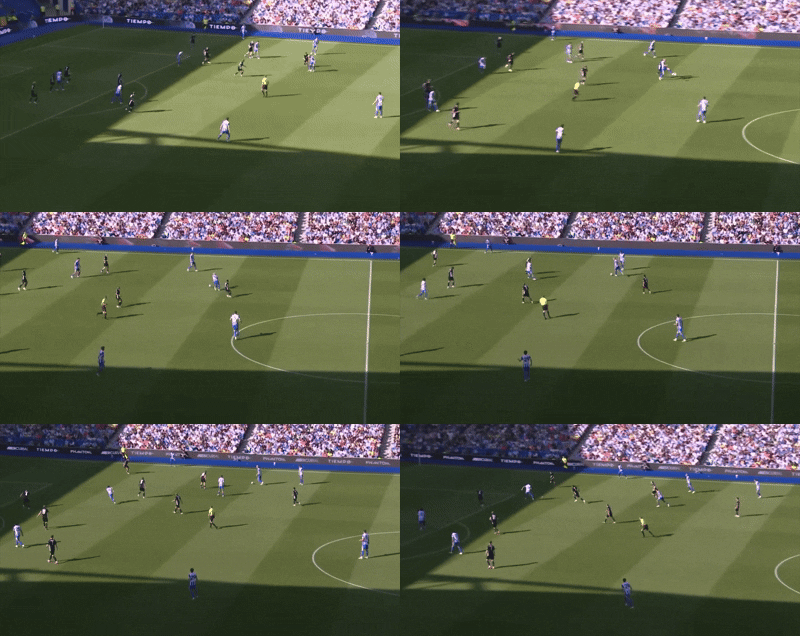
Strong enough to win the ball back and shield it, quick on the turn (for a CB), and plays a good penetrative pass that eventually led to a goal. Wieffer was left ball-watching here, but perhaps that’s a bit nitpicky.
I think you're onto something with the sock length. I remember thinking some teams had a bunch of fast/really leggy players until I realized all these teams had one thing in common: long socks of contrasting color to the kit pulled up high on the leg (notably Chelsea).